Why Turtlenecks Sometimes Look Frumpy (and How To Fix It)
Turtlenecks can look chic and intelligent—or like you’re hiding from your ex and three bad decisions. The difference? Fit, fabric, and styling.
If your turtleneck keeps drifting into “lumpy marshmallow” territory, you’re not alone. Let’s dig into why they sometimes look frumpy—and how to fix it so you look effortlessly put-together, not vaguely exhausted.
The Fit Problem: Too Tight or Too Baggy
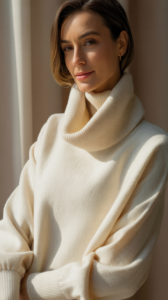
A great turtleneck works like a good selfie angle: it flatters, it lifts, and it doesn’t suffocate. When the neck is too tight, it bunches and creates that dreaded sausage-casing effect.
When it’s too loose, it collapses and you look like a turtle literally retreating into its shell.
What to aim for:
- Neck fit: A gentle hug, not a chokehold. You should slide two fingers comfortably inside the collar.
- Body fit: Skims, doesn’t cling. You want a clean line through the torso with space for movement.
- Shoulder seams: They should hit right at the edge of your shoulder bone.Dropped seams can read sloppy fast.
Try These Alternatives
- Mock necks give structure without bulk. Less fabric, fewer problems.
- Folded vs. scrunched: If the fabric is thick, fold it neatly. If it’s lightweight, scrunch it casually for texture.
Fabric Matters More Than You Think
You can’t out-style a bad fabric.
Cheap, flimsy knits cling to everything and show every seam, curve, and lunch choice. Ultra-thick knits add volume that reads frumpy instead of cozy.
Best fabric bets:
- Merino wool: Breathable, smooth, and holds shape. Office-friendly and not itchy.
- Cashmere or cashmere blends: Soft and luxe, drapes beautifully, ideal for sleek looks.
- Cotton-modal blends: Smooth, lightweight, and easy to layer.Great for everyday.
- Ribbed knits: Add vertical lines that slim and elongate.
Use with caution:
- Acrylic-heavy blends: They pill fast and look tired after two washes.
- Chunky cable knits: Cozy, yes, but make sure the fit is cropped or structured.
The Pilling Problem
Don’t let fuzz kill the vibe. Use a fabric shaver and wash knits inside out in a mesh bag. FYI, a little maintenance goes a long way.
Proportions: Balance or Bust
If your top adds volume, your bottom half needs structure.
That’s the entire game. A long, loose turtleneck over wide sweats equals “I gave up.” Pairing opposites creates instant polish.
Winning combos:
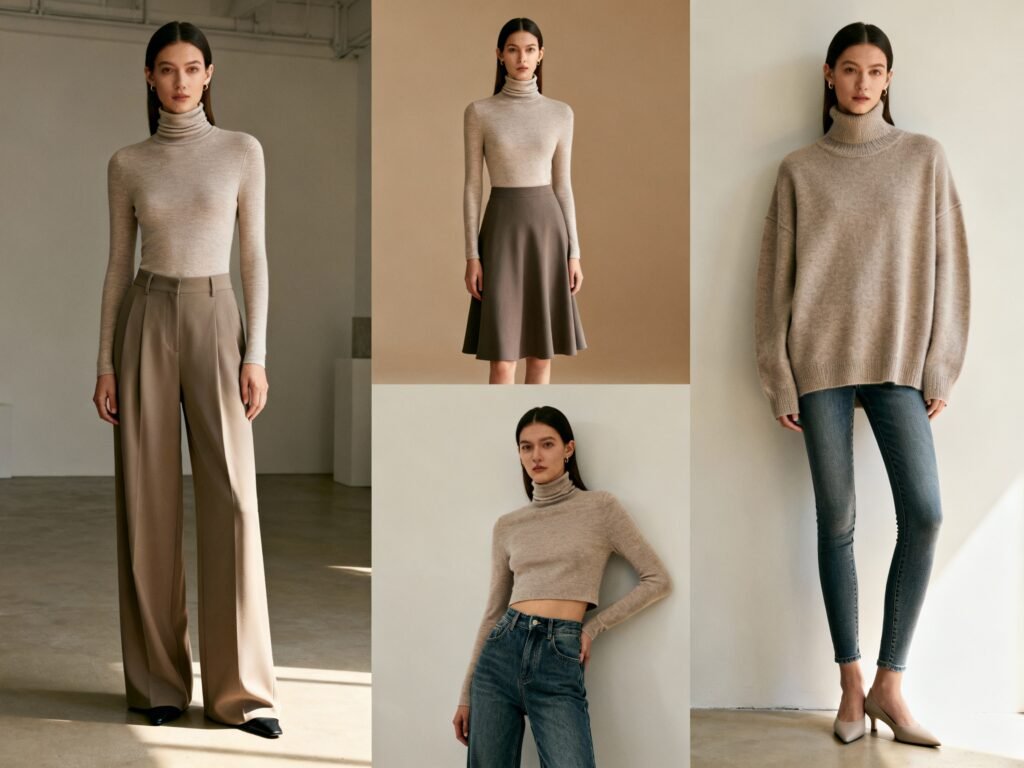
- Fitted turtleneck + wide-leg trousers = clean and modern
- Slim turtleneck + A-line skirt = balanced and feminine
- Cropped turtleneck + high-rise jeans = legs for days
- Oversized turtleneck + skinny jeans or tailored leggings = comfy but sharp
Length Checks
- Hip-length is the safest, most flattering general length.
- Cropped works with high-rise bottoms—less bulk at the waist.
- Tunic length needs a split hem or structure, or it turns boxy fast.
The Tuck Trick: Front, Full, or None?
Turtlenecks can create tummy bulk if you just let them hang. A strategic tuck changes everything.
- French tuck (half tuck): Tuck the front center into your waistband, let the sides drape.Adds shape without commitment.
- Full tuck: Works with thin knits and tailored trousers. Adds waist definition.
- No tuck: Fine if the hem hits mid-hip and the knit isn’t boxy.
Avoid the Michelin Waist
If you get lumps when you tuck, switch to thinner fabrics, higher-rise bottoms, or add a belt to smooth and define. IMO, the French tuck fixes 80% of “frumpy sweater” problems.
Layering: Your Shortcut to Looking Intentional
Layer a turtleneck under structured pieces and it looks deliberate, not accidental.
The contrast adds dimension and keeps the silhouette clean.
Layering ideas:
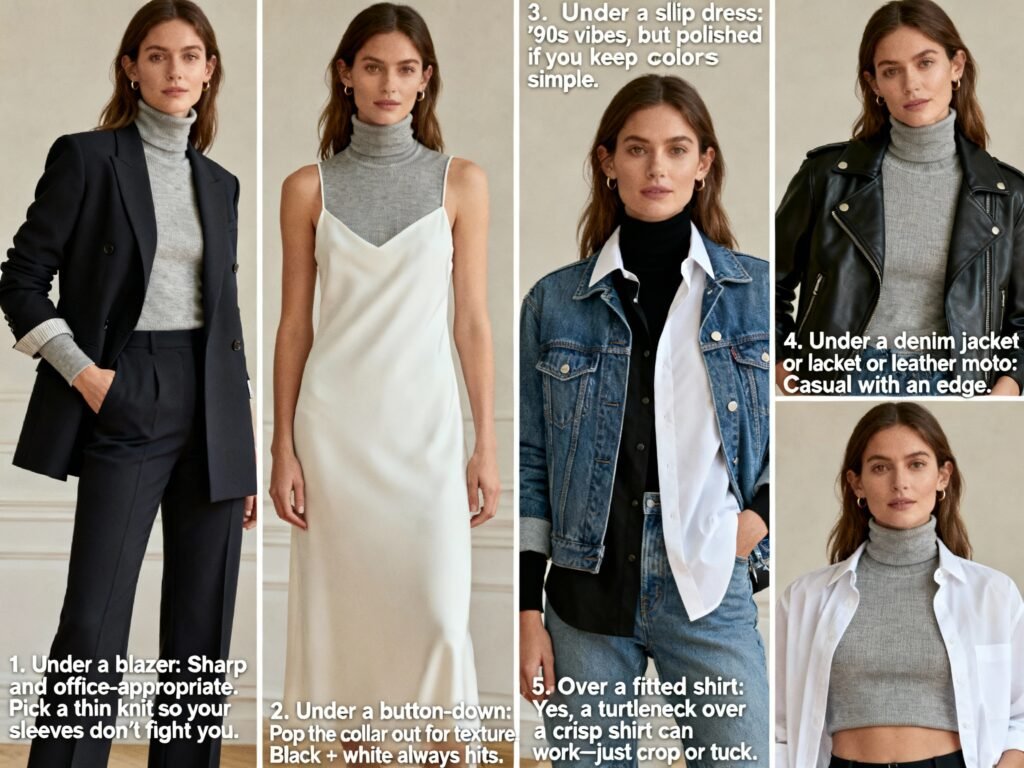
- Under a blazer: Sharp and office-appropriate. Pick a thin knit so your sleeves don’t fight you.
- Under a slip dress: ’90s vibes, but polished if you keep colors simple.
- Under a button-down: Pop the collar out for texture. Black + white always hits.
- Under a denim jacket or leather moto: Casual with an edge.
- Over a fitted shirt: Yes, a turtleneck over a crisp shirt can work—just crop or tuck.
Jacket Length Rules
Shorter jackets keep the look sharp.
Long coats work if the turtleneck is sleek or tucked. If everything is long and soft, you’ll drown in fabric.
Color and Texture: Keep It Intentional
Frump sneaks in when colors and textures clash unintentionally. Neutrals look rich when the textures vary.
Brights look modern when the silhouette stays clean.
Easy color strategies:
- Monochrome: Same color family, mixed textures. Example: camel turtleneck + camel coat + tan trousers.
- High contrast: Black turtleneck with light denim or cream trousers. Crisp and graphic.
- Pop color: One bold shade—keep the rest minimal.
Texture tips:
- Smooth top + textured bottom (silk skirt, corduroy, denim) prevents bulk-on-bulk.
- Ribbed turtleneck adds subtle structure and reads more “intentional” on camera.
Neckline Drama: Manage the Real Estate
The neck area sets the whole tone.
Too much fabric, no accessories, and you’re one step from “ski lodge lost and found.”
Fixes that work:
- Earrings: Hoops or studs add light near your face without competing with the collar.
- Necklace: Long pendants elongate. Avoid chokers—they fight the neckline.
- Lips/Glasses: A bold lip or statement frames can do more than jewelry, IMO.
- Hair: If your hair is long and full, try a low bun or pony to reveal the collar and jawline.
Fold vs. Scrunch, Revisited
If the neck looks bulky, fold it cleanly in half.
If it looks floppy, scrunch it with intention. Either way, commit. Half-folded chaos reads frumpy every time.
Common Mistakes That Make Turtlenecks Look Frumpy
- Wearing the wrong bra or base layer: Visible lines ruin clean silhouettes.Seamless or lightly lined works best.
- Ignoring posture: Roll your shoulders back. A turtleneck frames your neck—slouching doubles the fabric and the frump.
- Letting sleeves bunch: Push them up to mid-forearm for instant polish.
- Not tailoring: A quick sleeve or hem tweak can transform the whole piece.
- Old, pilled knits: Retire them to loungewear. Your future self thanks you.
FAQs
How tight should the neck of a turtleneck feel?
You want a gentle, comfortable hug.
If the collar leaves marks or you think about it constantly, it’s too tight. Two fingers should slide inside the collar easily without stretching it.
Can I wear a chunky turtleneck without looking bulky?
Yes—balance it with slim bottoms and structure. Add a half-tuck, roll the sleeves, and keep the neckline neat.
Choose cropped or straight hems over long, clingy ones.
What’s the best way to care for turtlenecks so they don’t pill?
Wash them inside out on cold, in a mesh bag, and lay flat to dry. Use a fabric shaver or sweater stone every few wears. Avoid tossing them in overloaded backpacks—friction = fuzz.
Are mock necks more flattering than full turtlenecks?
Often, yes.
Mock necks offer length without bulk and play nicely with blazers. If full turtlenecks overwhelm your frame, a mock neck keeps the look sleek.
How do I style a turtleneck for a dressy event?
Go for a fine-gauge knit in a dark neutral, tuck it into tailored trousers or a satin midi skirt, add sleek boots or heels, and layer with a sharp blazer or long coat. Finish with bold earrings or a red lip for drama.
What if I have a short neck—can I still wear turtlenecks?
Totally.
Try mock necks or thin, scrunched collars. Keep your hair up or back, choose V- or long-neck accessories, and lean into monochrome looks to elongate the line.
Conclusion
Turtlenecks only look frumpy when the details go rogue. Nail the fit, pick the right fabric, balance your proportions, and layer with intent.
Treat the collar like prime real estate, add a French tuck, and you’ll upgrade from “winter potato” to “effortless icon” in five minutes flat. FYI, once you find your perfect fabric and fit, you’ll wonder how your closet ever worked without them.