




You know that moment when you catch a whiff of yourself and think, “Is that… me?” We’ve all been there. Deodorant helps, showers help (obviously), but your diet can do some heavy lifting too. Certain vitamins and nutrients can support your body’s natural detox, tame odor-causing bacteria, and keep you smelling fresher for longer.
Let’s talk about the vitamins that actually make a difference—and how to get them without popping a million pills.
Body odor doesn’t come from your sweat alone—sweat smells when bacteria feast on it and create byproducts. Hormones, stress, and what you eat can dial things up or down. So where do vitamins come in? Vitamins support your skin, gut, and liver—three systems that influence odors big time.
When you give them what they need, your body processes waste better, your skin barrier stays healthier, and your sweat doesn’t become a buffet for funky smells.
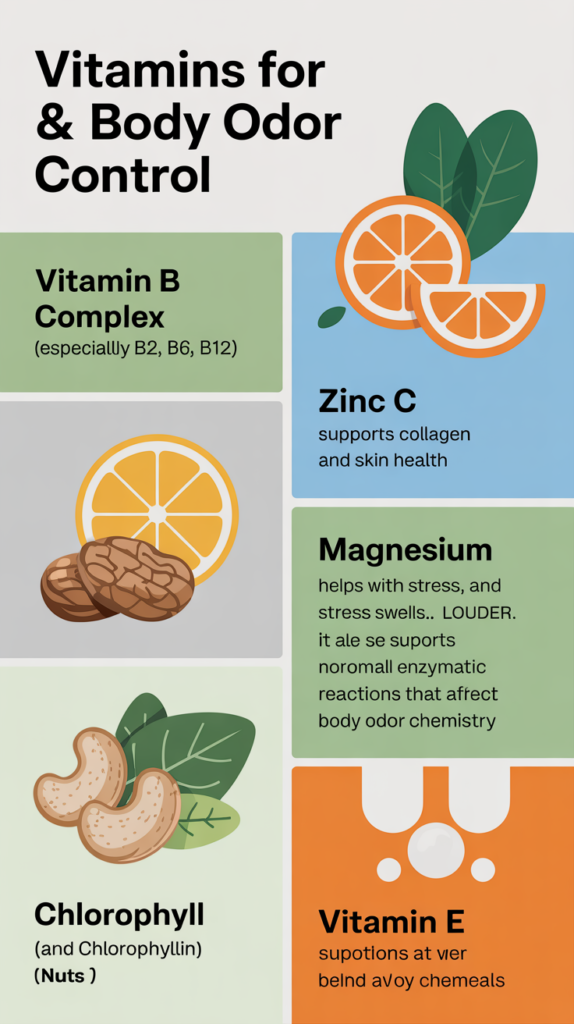
B vitamins help your body metabolize proteins and fats, which affects how your sweat smells. Vitamin B2 (riboflavin) and B6 (pyridoxine) support normal amino acid breakdown, so fewer smelly compounds build up. B12 helps keep your nervous system steady—less stress sweat, less drama.
Vitamin C supports collagen and skin health, but it also acts as an antioxidant that fights odor-causing compounds. It helps your body process and eliminate toxins more efficiently.
Bonus: it can slightly acidify your skin surface, which bacteria do not love.
Technically a mineral, but it deserves a VIP pass. Zinc regulates sweat gland function and supports your immune system.
Low zinc can correlate with skin issues and stronger odors. IMO, zinc sits near the top of the list for BO help.
Magnesium helps with stress response, and stress sweat smells… louder. It also supports normal enzymatic reactions that affect body odor chemistry.
People even use topical magnesium deodorants—for some, they work surprisingly well.
Not a vitamin, but a classic “internal deodorant.” Chlorophyllin (a semi-synthetic form) has research behind it for reducing trimethylaminuria (fishy odor syndrome). Anecdotally, some people notice fresher breath and body scent.
Vitamin E fights oxidative stress in skin and sebum.
Less rancid sebum = less “old gym bag” aroma. It pairs nicely with vitamin C.
Your gut microbiome influences your sweat and breath more than you’d think. A healthy gut means fewer odor-causing metabolites leaking into circulation. Probiotics (like Lactobacillus and Bifidobacterium) and prebiotics (fiber that feeds them) help.
Water dilutes sweat and keeps it flowing cleanly.
Electrolytes help you absorb water and avoid that “stale sweat” situation.
Some foods make you smell stronger. You don’t need to quit them forever (garlic lovers, I see you), but timing matters.
– Greek yogurt with berries, chia, and pumpkin seeds – Or a spinach-egg scramble with tomatoes and avocado
– Big salad with arugula, chicken or chickpeas, bell peppers, olive oil, lemon, and herbs – Add a side of kefir or a kombucha if your gut likes it
– Salmon or tofu with broccoli, quinoa, and a handful of parsley on top – A square of dark chocolate for magnesium (you earned it)
– Citrus fruit, almonds, carrot sticks with hummus – FYI: chewing parsley or mint can freshen breath fast
You can cover most of this with food. But if you want a supplement routine:
Check with your healthcare provider if you take meds, have health conditions, or suspect deficiencies. Don’t stack multiple fortified products unknowingly—labels matter.
– Shower timing: Rinse after workouts ASAP.
Bacteria party on old sweat. – Clothes: Choose breathable fabrics. Wash athletic gear with an enzyme detergent. – Shave or trim: Less hair = fewer places for bacteria to hide. – Stress management: Box breathing, walks, lifting, stretching. Stress sweat is spicier—literally. – Deodorant strategy: Apply at night to let actives work.
Consider magnesium or aluminum-free formulas if you’re sensitive.
They help, but they won’t cancel poor hygiene or a gut imbalance. Use vitamins with smart habits: clean diet, good sleep, hydration, and timely showers. The combo works best.
Most people notice small changes in 1–2 weeks, bigger shifts in 4–6 weeks.
Your microbiome and nutrient stores need time. Be consistent—your nose (and everyone else’s) will thank you.
Usually, yes, at typical supplement doses. Some folks get stomach upset or green stools (not a horror movie, just chlorophyll).
If you’re pregnant, breastfeeding, or on meds, get your clinician’s thumbs-up first.
Rule out medical causes. Infections, diabetes, thyroid issues, and certain medications can change body odor. If things shift fast or you also feel off, talk to your doctor.
Short answer: not really.
Your liver and kidneys already detox like pros. Support them with nutrients (Bs, C, magnesium), fiber, water, and sleep. Save your money for groceries.
Absolutely.
Too much zinc can cause nausea and deplete copper. Mega-dosing vitamins can backfire. Stick to balanced amounts and food-first whenever possible.
IMO, moderation wins every time.
You can’t supplement your way out of a cheeseburger-and-stress lifestyle, but the right vitamins and minerals make staying fresh way easier. Focus on B vitamins, vitamin C, zinc, magnesium, and chlorophyll-rich foods. Eat colorful plants, hydrate, and chill a little.
Combine that with smart hygiene, and you’ll smell like the put-together version of yourself—all day, every day.