Minimalist Vitamin Routine For Health & Glow
You don’t need a 27-step supplement stack to feel good and glow. You need a few strategic vitamins, a routine you’ll actually follow, and a plate that looks like someone’s rainbow exploded on it. Let’s cut the fluff, keep the essentials, and build a minimalist vitamin routine that delivers real results without draining your wallet or your patience.
Why Minimal Works (And Bloated Stacks Don’t)
Minimalism wins because consistency wins.
You’ll forget nine powders and three tinctures by Thursday. But a tight routine? You’ll stick with it.
Plus, fewer supplements mean less risk of weird interactions and more clarity on what’s actually helping. Goal: Cover daily nutritional gaps, support energy, skin, mood, and immunity. No kitchen chemistry set required.
The Core Four: Vitamins Worth Your Daily Real Estate
If you want the short list, here it is. These four carry most people, most of the time.
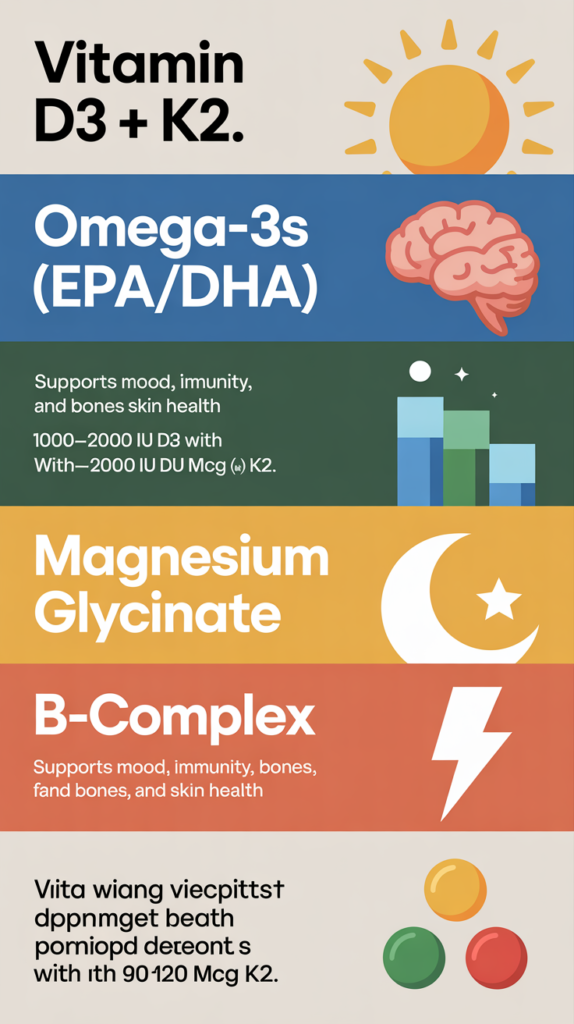
- Vitamin D3 + K2: Supports mood, immunity, bones, and skin health.Most people don’t get enough sunlight. The K2 helps direct calcium to bones instead of arteries. Aim for 1000–2000 IU D3 with 90–120 mcg K2, taken with food.
- Omega-3s (EPA/DHA): Think brain, heart, joints, skin glow.Most diets lean heavy on omega-6, so balance helps. Look for 1–2 grams combined EPA/DHA daily. If you’re plant-based, go for algae oil.
- Magnesium Glycinate: Calms nerves, supports sleep, helps muscles, and keeps things regular (if you know, you know).Take 200–400 mg at night. Glycinate is gentle on the stomach.
- B-Complex (or just B12 if plant-based): Energy production, stress support, healthy hair/skin, and mood. If you eat animal products, a basic B-complex 2–3x/week works.If you’re vegan or low on animal foods, take B12 daily (1000 mcg methylcobalamin or adenosylcobalamin).
IMO: Start here. You can always level up, but you probably won’t need to.
What About a Multivitamin?
You can use a clean, low-dose multivitamin instead of a B-complex if you want an easy “insurance policy.” Just avoid megadoses. If your diet rocks and you take the core four, you may not need a multi at all.
Less is more.
Skin-Forward Extras (If You Want That Glow)
Not mandatory, but these help the “glow” part.
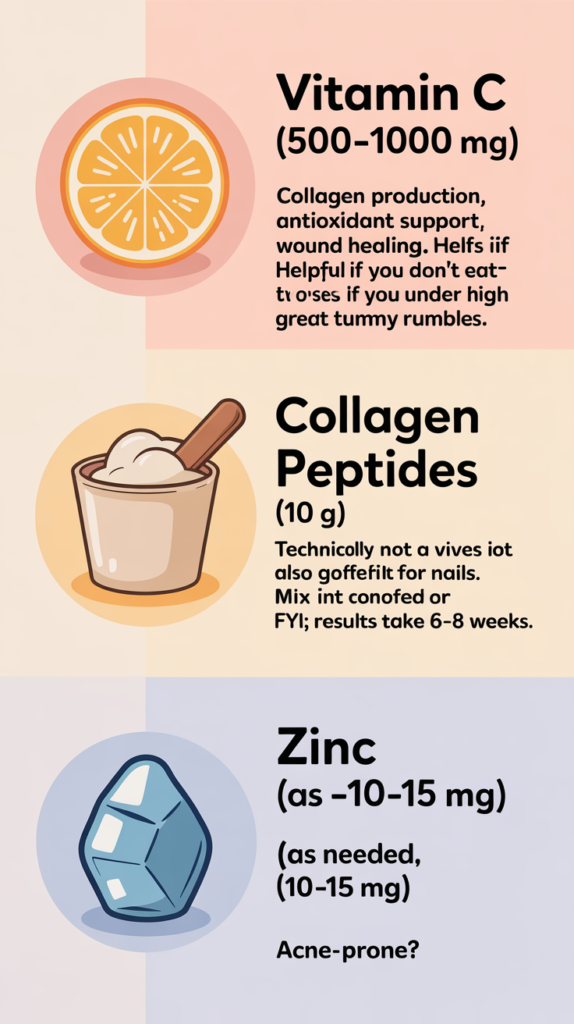
- Vitamin C (500–1000 mg): Collagen production, antioxidant support, wound healing. Helpful if you don’t eat much fruit or you’re under high stress. Split doses if you get tummy rumbles.
- Collagen Peptides (10 g): Technically not a vitamin, but skin loves it.Also great for joints and nails. Mix into coffee or smoothies. FYI: results take 6–8 weeks.
- Zinc (as needed, 10–15 mg): Acne-prone?Zinc can help inflammation and healing. Don’t take high doses long term. Pair with copper if you go above 15 mg.
Plant-Based Glow Tip
Add algae omega-3, B12, and consider iron if energy dips and labs suggest deficiency.
For skin, prioritize vitamin C foods and flax, chia, or walnuts for ALA omega-3s.
Timing That Doesn’t Require a Spreadsheet
You don’t need a supplement calendar app.
Keep it simple and tie it to meals you never skip.
- Morning with breakfast: D3/K2, omega-3s, optional multi or B-complex.
- Evening: Magnesium glycinate.
- Anytime with food: Vitamin C and zinc (if using). Collagen can go anywhere.
Pro tip: Put your supplements next to your coffee or toothbrush.
If it’s out of sight, it’s gone forever.
Food First, Supplements Second
Supplements fill gaps. Food does the heavy lifting. Want glow?
Eat like you mean it.
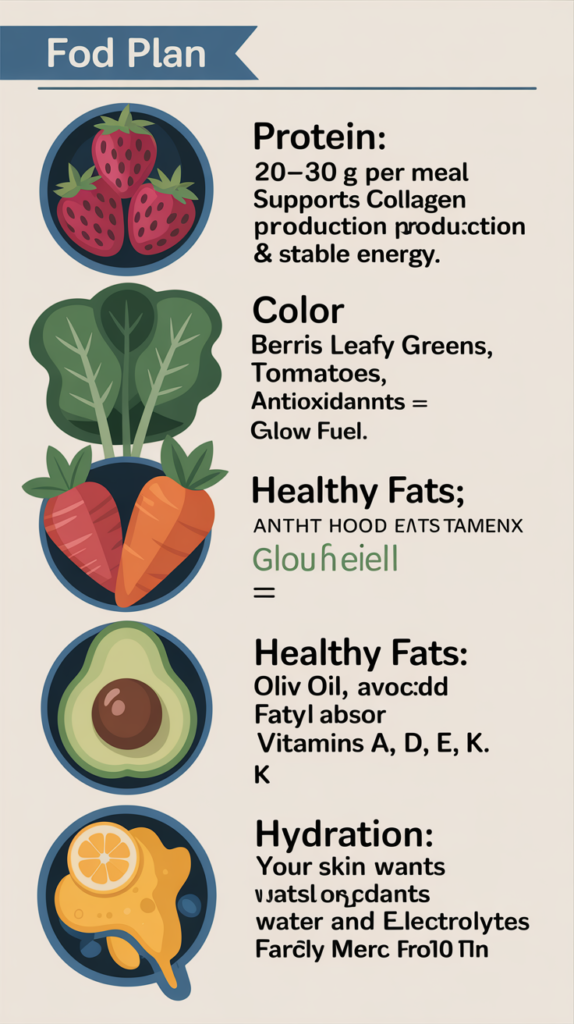
- Protein: 20–30 g per meal supports collagen production and stable energy.
- Color: Berries, leafy greens, tomatoes, carrots. Antioxidants = glow fuel.
- Healthy fats: Olive oil, avocado, fatty fish. Fats help absorb vitamins A, D, E, K.
- Hydration: Your skin wants water and electrolytes.Add a pinch of salt or use lemon water if you sweat a lot.
Quick Grocery List
- Salmon or sardines, eggs, Greek yogurt (or tofu/tempeh + legumes if plant-based)
- Spinach, kale, arugula, berries, oranges, tomatoes
- Avocado, olive oil, tahini, walnuts
- Sweet potatoes, oats, quinoa
How to Customize Without Overcomplicating
Everyone’s different. Start with the core four for 8 weeks, then ask: what changed?
- Low energy? Check iron and B12 labs. Add iron only if deficient (with vitamin C for absorption).
- Breakouts? Trial zinc for 8–12 weeks and cut back on ultra-processed oils.Consider omega-3 bump.
- Sleep meh? Increase magnesium slightly or add glycine (3 g) or theanine (200 mg) at night.
- Digestive drama? Space out supplements and take with meals. Consider magnesium type switch (glycinate over citrate).
FYI: If you take meds or have conditions, double-check interactions with your clinician. Minimalism doesn’t cancel safety.
Red Flags and No-Nos
Let’s dodge the common traps.
- Megadoses “just in case”: More isn’t better.It’s usually just more expensive pee.
- Mixing fat-soluble vitamins with fasting: D3, K2, A, E need food with fat for absorption.
- Skipping labs forever: If you suspect deficiencies (D, B12, iron, ferritin), test. Don’t guess for months.
- Dirty fish oil: Choose third-party tested brands to avoid rancid oils. If it repeats on you, freeze the capsules or switch to algae oil.
How to Read a Label (Without Crying)
- Forms matter: Magnesium glycinate or malate; methylcobalamin or adenosylcobalamin; D3 not D2.
- Fillers: Fewer is better.Avoid added sugars or dyes.
- Testing: Look for NSF, USP, Informed-Choice, or third-party testing claims.
Budget-Friendly Minimal Routine
You can glow without a second mortgage.
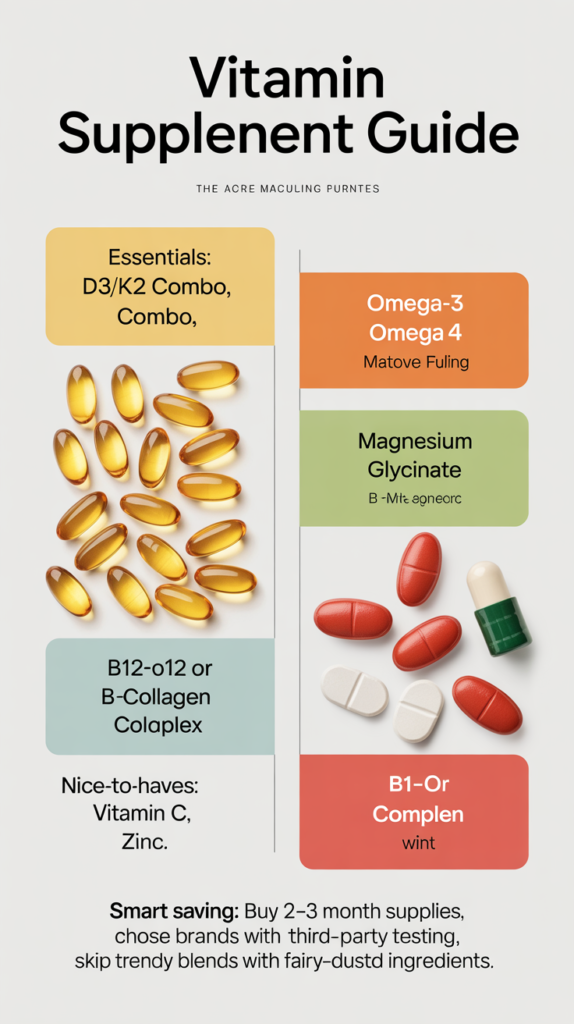
- Essentials: D3/K2 combo, omega-3, magnesium glycinate, B12 or B-complex.
- Nice-to-haves: Vitamin C, collagen, zinc.
- Smart saving: Buy 2–3 month supplies, choose brands with third-party testing, skip trendy blends with fairy-dusted ingredients.
IMO: Spend a little more on omega-3 and magnesium quality. You’ll feel the difference.
FAQ
Can I take all these at once?
You can, but you’ll absorb fat-soluble vitamins better with a meal that includes fat. Magnesium works best at night for most people.
Spread them out if your stomach complains.
Do I need a probiotic too?
Not always. If you have gut issues, try food-first options: fermented foods 3–4 times a week (yogurt, kefir, kimchi, sauerkraut). If you still struggle, choose a targeted probiotic strain based on symptoms.
Otherwise, save your cash.
How long until I see results?
Energy and sleep improvements can show up within 1–2 weeks. Skin and hair changes usually take 6–12 weeks. Consistency matters more than “perfect” timing.
Isn’t vitamin A important for skin?
Yes, but you usually get enough from food (eggs, dairy, liver, orange veggies as beta-carotene).
Retinol supplements can be risky in high doses. If you use topical retinoids, you probably don’t need oral vitamin A unless a clinician recommends it.
What if I already take a multivitamin?
Cool. Check if it already includes D, K, and some B vitamins.
You can keep the multi, then add omega-3 and magnesium. Avoid doubling up on fat-soluble vitamins.
Do I need blood tests before starting?
Not for the basics. Still, testing vitamin D, ferritin, B12, and thyroid annually helps you personalize the plan.
If symptoms persist despite supplements, definitely test.
Bottom Line
Keep your routine lean so you actually follow it. Start with D3/K2, omega-3s, magnesium glycinate, and a B boost. Layer in vitamin C or collagen if glow is the goal.
Eat colorful, protein-rich meals, drink water like a grown-up, and give it 8 weeks. Minimal steps, maximal payoff—because your shelf doesn’t need another dusty bottle.