How To Mix Animal Prints With Neutrals For An Expensive Aesthetic
Animal prints can look rich or ridiculous—there’s no middle ground. The trick? Pair them with neutrals that let the pattern flex without screaming for attention.
If you want that expensive aesthetic—think quiet luxury, but with a little roar—this guide will shortcut the guesswork and help you nail it every time.
Start With One Statement Animal
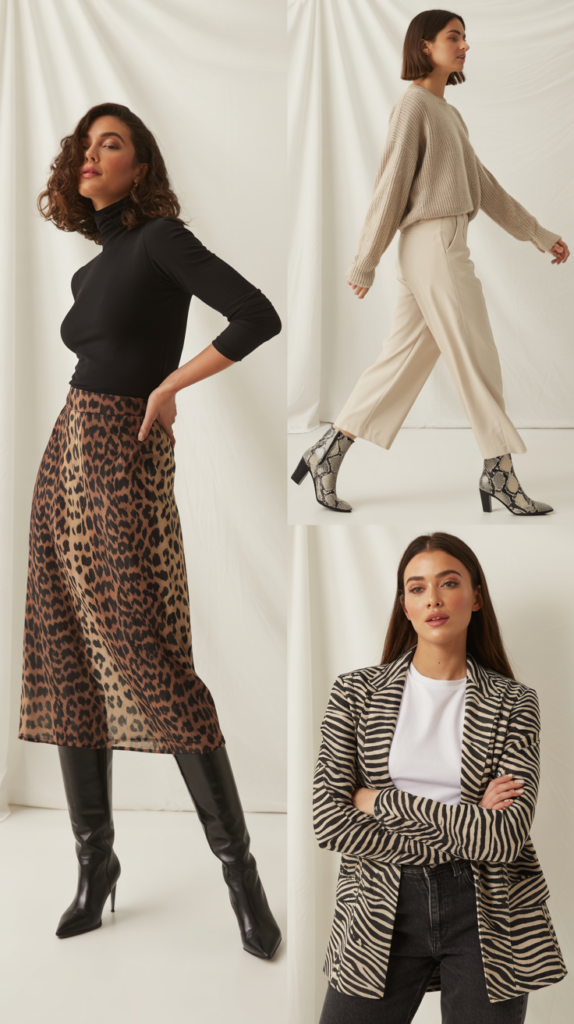
Don’t try to be a walking safari. Pick one animal piece to lead and let everything else support it. A leopard midi skirt, a zebra blazer, or snakeskin boots?
Great. Then build a neutral outfit around it.
Key rule: anchor the look with a simple base:
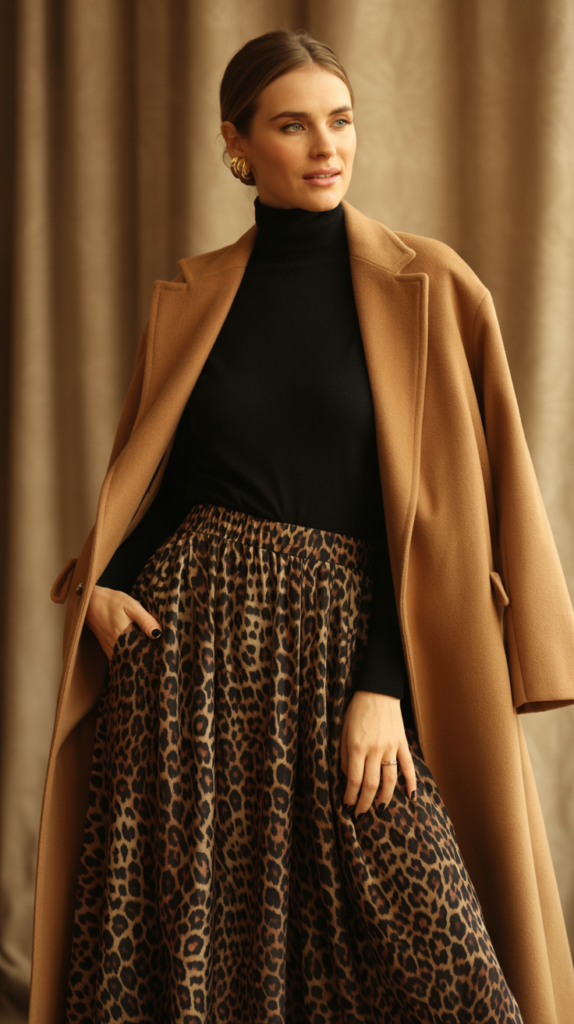
- Leopard skirt + black turtleneck + black knee boots
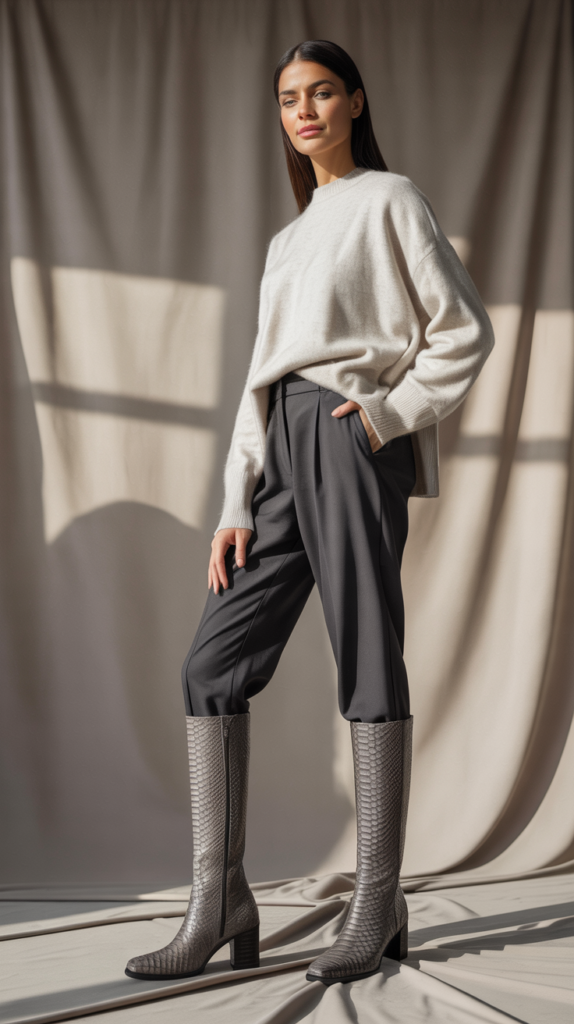
- Snakeskin boots + cream trousers + oatmeal sweater
- Zebra blazer + white tee + dark denim
You get drama and polish without chaos. That’s the “I didn’t try, I just have taste” vibe.
Pick the Right Neutrals (They’re Not All Equal)
Not all neutrals play nice with animal prints.
Choose shades that either echo the print or cleanly contrast it.
- Black: Always sleek with leopard and zebra. Gives instant edge.
- Cream/ivory: Softens snakeskin and snow leopard. Looks luxe, not stark.
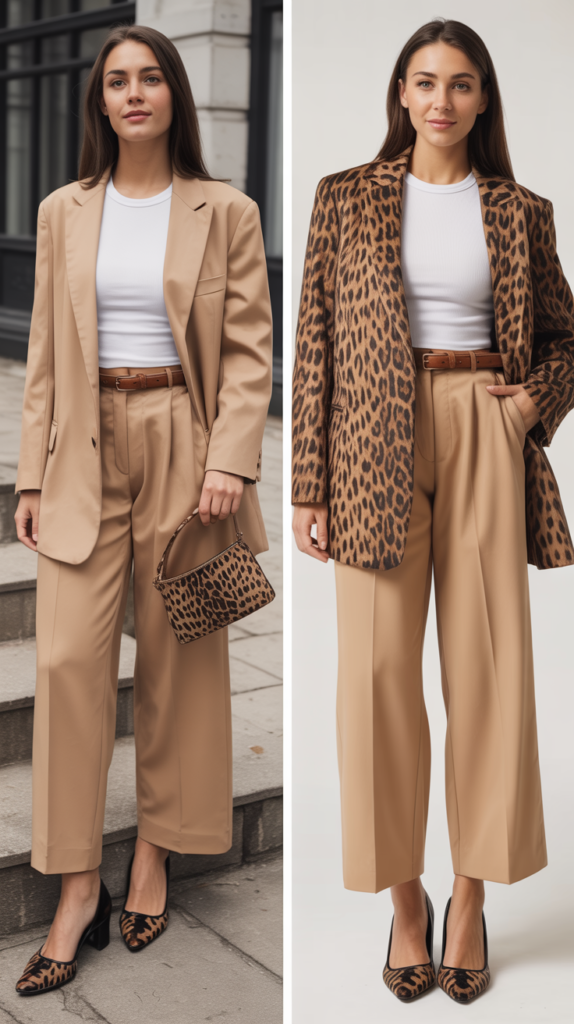
- Brown/tan/camel: Warms classic leopard and cheetah.Very “old money” IMO.
- Gray/charcoal: Chic with python or muted zebra. Understated but sharp.
- Olive: Earthy, sophisticated partner to leopard and tiger prints.
Avoid super bright whites with warmer-toned prints unless you want the contrast to shout. And keep bright colors out if you’re going for expensive—save neon for the gym bag.
Mind Your Fabric Textures
Fabric can make or break the “pricey” effect.
Cheap sheen reads cheap, period. Choose textures that absorb light and feel substantial.
- Wools and cashmere: Ground busy prints and look rich.
- Matte leather or suede: Adds structure and depth without glare.
- Silk or satin (matte, not shiny-shiny): Luxe when you need drape.
- Denim: Dark, clean washes pair best. No distressing, FYI.
Texture Pairings That Always Work
- Leopard calf-hair belt + cashmere sweater + wool trousers
- Python booties + silk blouse + structured wool coat
- Zebra print blouse + matte leather skirt + opaque tights
Play With Scale and Placement
Print scale matters.
Smaller prints read more refined; bigger prints demand attention. Use that strategically.
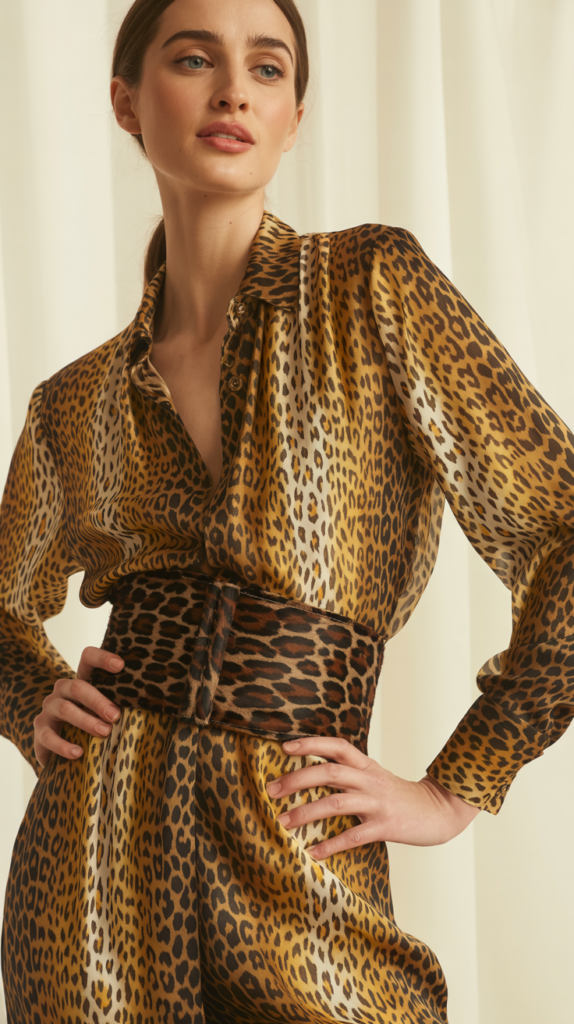
- Small-scale prints: Better for blouses, scarves, belts.
- Medium-scale prints: Great for skirts, dresses, shoes.
- Large-scale prints: Limit to one piece—coats or wide-leg pants—then keep everything else whisper-quiet.
Where to Place the Print
- On top: Print blouse or blazer draws the eye up—great for Zoom life and IRL.
- On bottom: Skirts and pants feel bold but balanced with simple tops.
- On accessories: Belts, bags, shoes—tiny doses that still feel intentional.
Use Neutrals to Create Shape
You control the eye with lines and color blocks. Use neutrals to sharpen the silhouette so the print doesn’t blur everything.
- Column dressing: Wear a head-to-toe neutral column (top + bottom) and add an animal jacket or shoes.Instant length.
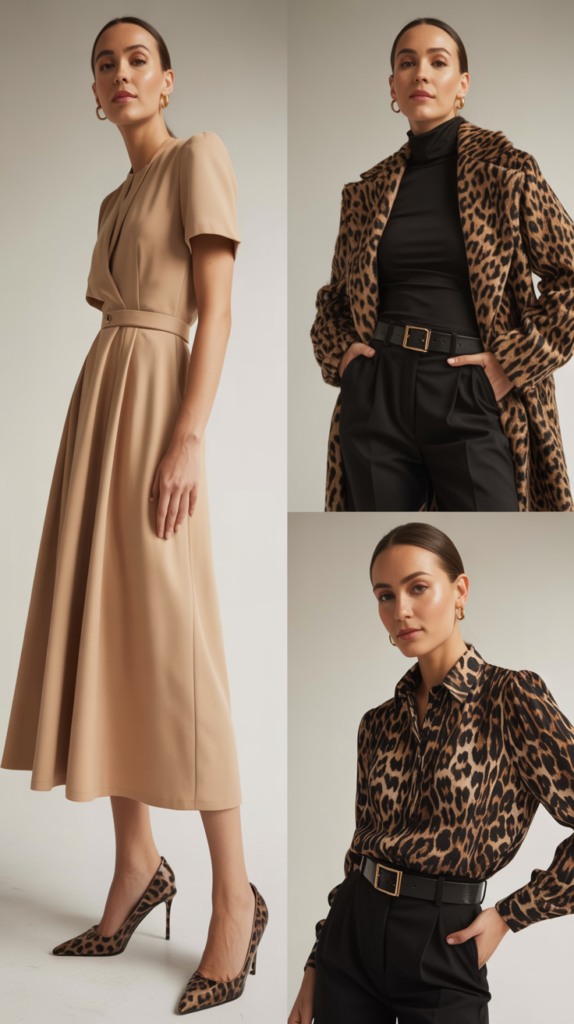
- High contrast edges: Black turtleneck under a leopard coat creates clean verticals. Very polished.
- Belts: A slim belt in black or tan defines the waist and reins in a bold print.
Accessories: Keep Them Quiet, Not Boring
You don’t need a museum’s worth of jewelry. Choose fewer, better-feeling pieces.
Metal tone matters too.
- Gold: Warms leopard and tiger. Think thin hoops, a cuff, a delicate chain.
- Silver: Sleek with zebra and python. Minimalist, architectural shapes look expensive.
- Leather bags: Black, chocolate, or taupe.Structured silhouettes > slouchy sacks.
- Sunglasses: Classic frames only—wayfarer, cat-eye, or slim oval. No wild logos.
Shoe Strategy That Never Fails
- Animal shoe + neutral outfit = subtle flex
- Neutral shoe + animal garment = elegant balance
- Two animal pieces? Make them match species and tone (e.g., leopard belt + leopard flats) and keep everything else neutral, or don’t do it at all.
Mixing Multiple Prints (If You Must)
Yes, you can mix animal prints and still look expensive.
But treat it like you’re curating art, not throwing a party.
1. Stay in one family: Leopard + leopard, but vary scale or texture (silk blouse with calf-hair belt).
2. Limit to two pieces: Any more veers costume.
3. Neutral buffer: Put a solid block—like a black blazer—between the prints.
4. Mute one print: Choose a washed or grayscale animal with a classic one.
Color Palettes That Always Look Luxe
When in doubt, steal these combos and run:
- Leopard + black + camel: Turtleneck, leopard skirt, camel coat.
- Python + ivory + charcoal: Python boots, ivory sweater, charcoal trousers.
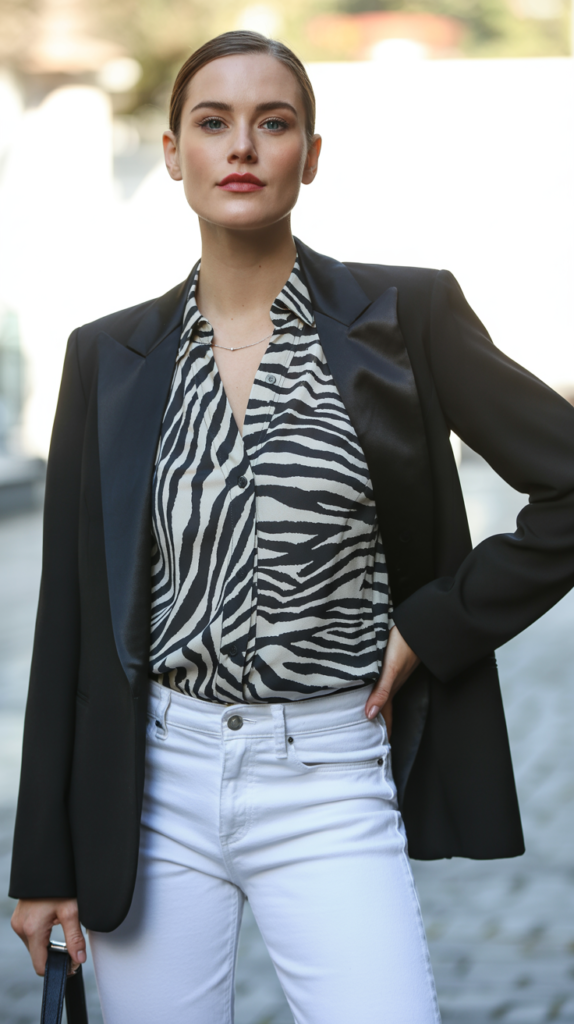
- Zebra + white + black: Zebra blouse, white jeans, black blazer.
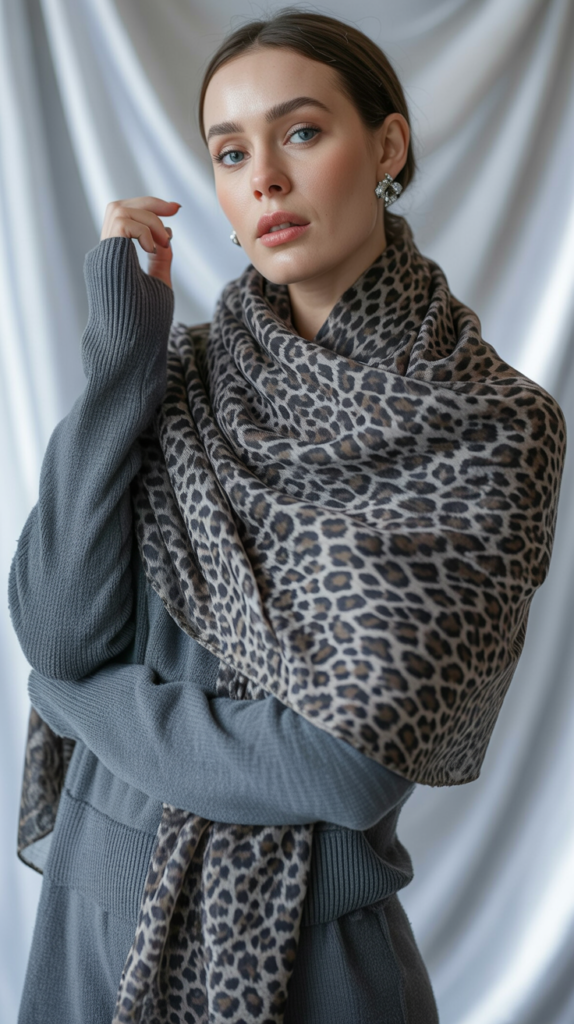
- Snow leopard + gray + silver: Snow leopard scarf, gray knit set, silver studs.
Yes, they’re simple. That’s the point. Quiet confidence reads as money.
Fit, Tailoring, and the “Nope” List
Nothing ruins an animal print faster than a sloppy fit.
Tailoring makes everything look intentional.
- Hem and shorten sleeves: Cropped cuffs and clean hems look custom.
- Skim, don’t squeeze: Prints stretch when too tight and look cheap—IMO, a quick no.
- Sharp shoulders: A lightly structured blazer elevates everything under it.
The “Nope” List:
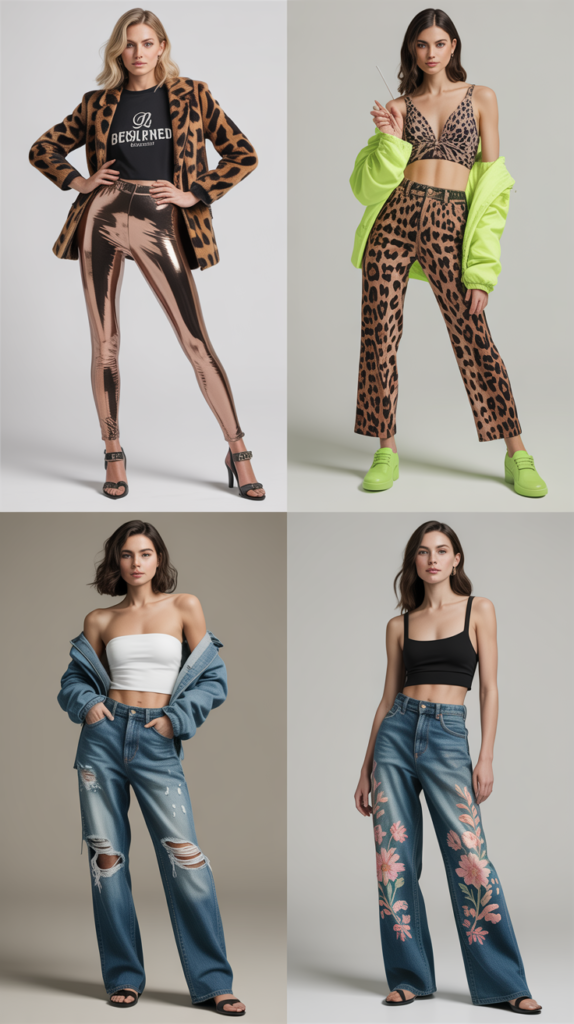
- Shiny leggings in animal print (unless you’re on stage)
- Giant logos next to animal prints
- Neon with leopard, unless you want “festival,” not “first-class”
- Overly distressed denim with refined prints
Care and Quality: Keep It Luxe
Expensive doesn’t always mean expensive price tags, but it does mean thoughtful choices.
- Look for depth: Prints with layered tones beat flat, one-note patterns.
- Touch test: If it feels plasticky, it’ll look plasticky under lights.
- Care properly: Steam, don’t iron, especially synthetic blends. Use fabric shavers on knits.
- Shoe maintenance: Keep snakeskin conditioned and suede brushed. Scruffy boots kill the vibe fast.
FAQs
Can I wear animal prints to the office without looking extra?
Absolutely.
Choose one refined piece—like a leopard belt or snakeskin loafers—and pair with structured neutrals. A black blazer over a subtle zebra blouse reads polished, not party. Keep silhouettes clean and skip loud accessories.
What animal print looks the most expensive?
Leopard in warm, natural tones tops the list when the print looks organic, not cartoonish.
Python in muted grays or taupes also reads very luxe. Zebra can look high-end with crisp tailoring and minimal styling.
How do I mix animal prints if I’m a beginner?
Match species and vary scale or texture—leopard-on-leopard with different sizes feels cohesive and intentional. Keep the rest of the outfit strictly neutral.
Add one buffer layer, like a black cardigan or camel coat, to break up the pattern.
Which neutrals should I avoid with animal prints?
Bright, stark white can look harsh with warm leopards. Also avoid muddy, greenish grays that clash with rich browns. If you’re unsure, black, camel, ivory, and charcoal rarely fail.
Can I wear animal prints year-round?
Yes, just adjust fabric and weight.
Go lighter with silk or chiffon in spring/summer and switch to wool, suede, and leather for fall/winter. Keep the color palette seasonally appropriate and you’re golden.
Are animal print accessories enough to elevate basics?
Totally. A calf-hair belt, a snakeskin bootie, or a zebra clutch can transform a jeans-and-tee moment.
Keep the rest matte and simple for maximum impact, FYI.
Wrap-Up: Minimal Effort, Maximum Chic
Animal prints turn heads; neutrals keep the look rich. Pick one hero piece, balance it with quality textures, and let clean lines do the heavy lifting. When in doubt, simplify and tailor.
That’s how you get the expensive aesthetic—without maxing your card or your patience.