Fabrics That Define A Quiet Luxury Closet
Quiet luxury doesn’t scream. It whispers. It feels expensive without flaunting logos, and it earns compliments like “You look so put together” instead of “Where’d you get that?” If you’re ready to build a wardrobe that reads refined and timeless, start with the fabric.
Because the right materials do the heavy lifting while you pretend it’s all effortless.
What “Quiet Luxury” Really Looks Like in Fabric Form
Quiet luxury lives in texture, drape, and how something ages. You want fibers that hold shape, resist pilling, and feel incredible against skin. The kind of pieces you reach for on autopilot because they always look polished. Rule of thumb: favor natural fibers, tight weaves, and low-sheen finishes.
If it looks shiny or flimsy under bright light, it probably won’t make the cut.
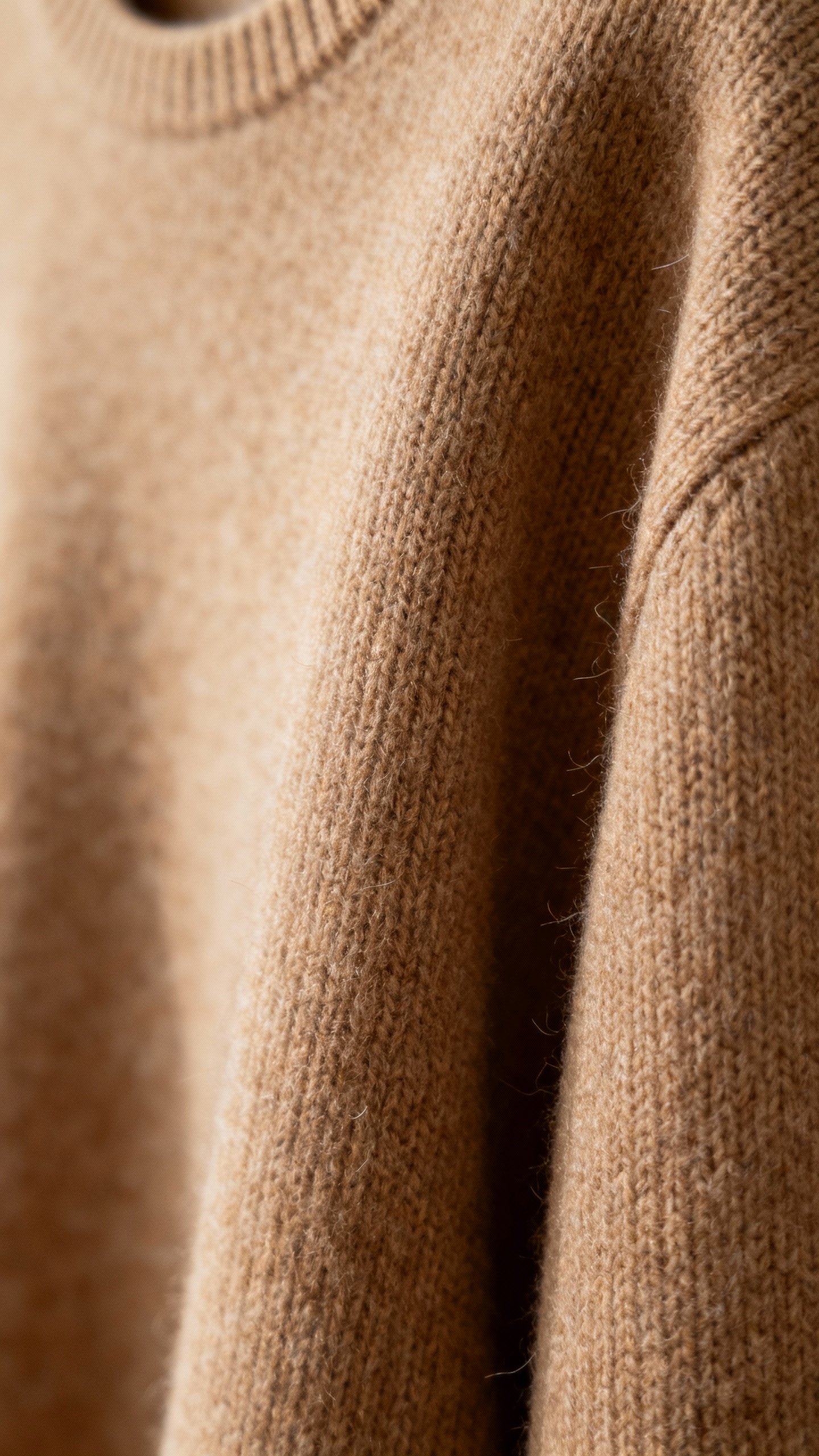
Cashmere: The MVP of Discreet Indulgence
Cashmere sets the tone for a quiet luxury closet. It’s soft, breathable, and somehow cozy yet elegant. You can dress it up for dinner or throw it over leggings and still look intentional.
What to Look For
- Grade and ply: Look for long-staple fibers and 2–4 ply knits.They pill less and last longer.
- Gauge: A mid-gauge crewneck or cardigan gives structure without bulk. Heavy gauge for winter; fine gauge layers for year-round.
- Finish: Matte, not shiny. Shiny cashmere usually means over-processing.
How to Wear It
- A camel crewneck with dark denim and loafers.Classic, zero effort.
- A charcoal cardigan over a silk tank for a soft power look.
- FYI: a cashmere scarf upgrades literally any coat.
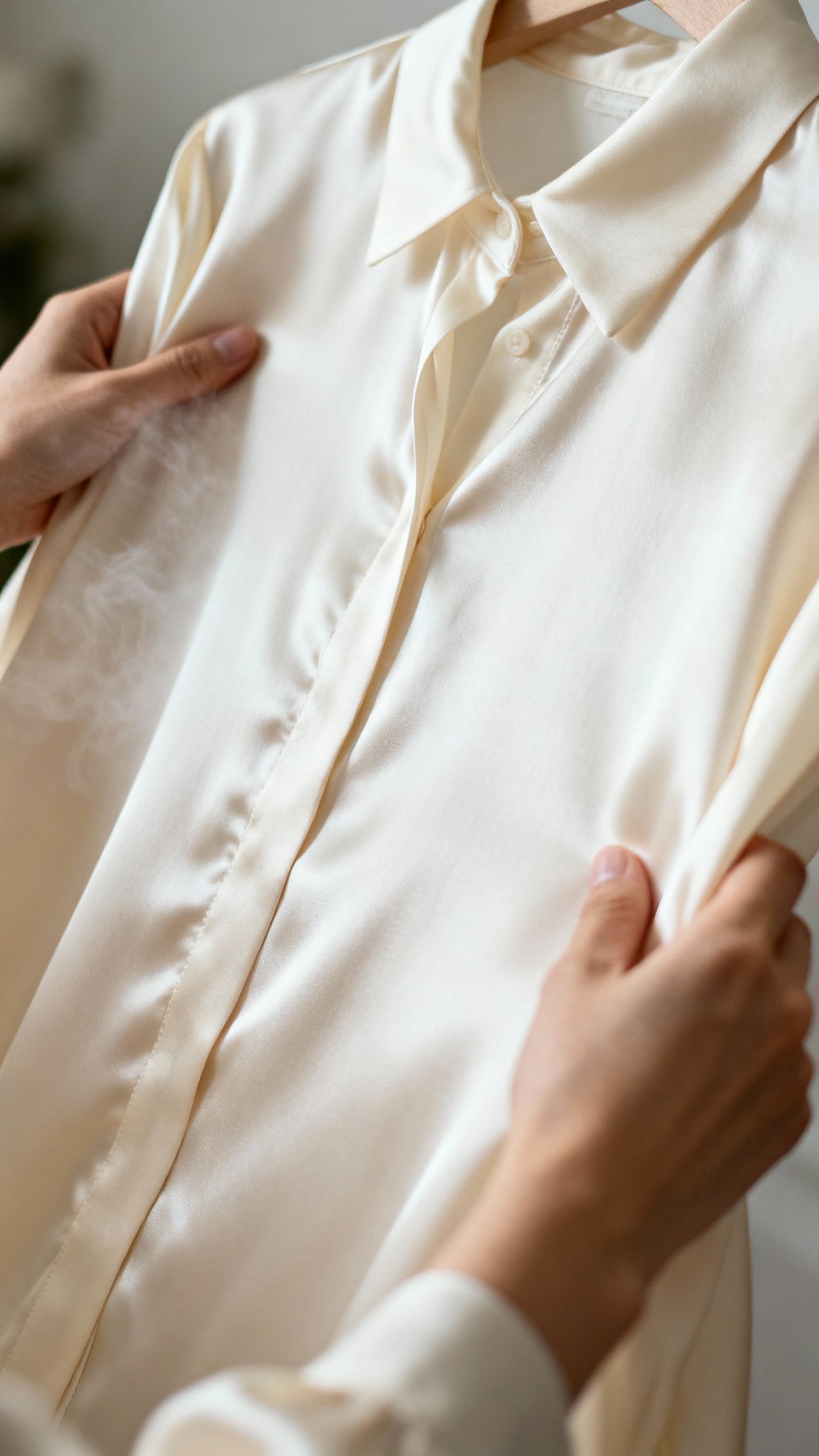
Silk: The Quiet Power Move
Silk drapes like a dream and elevates basics instantly. It doesn’t need prints or logos—just good tailoring and a neutral palette.
Silk Types Worth Knowing
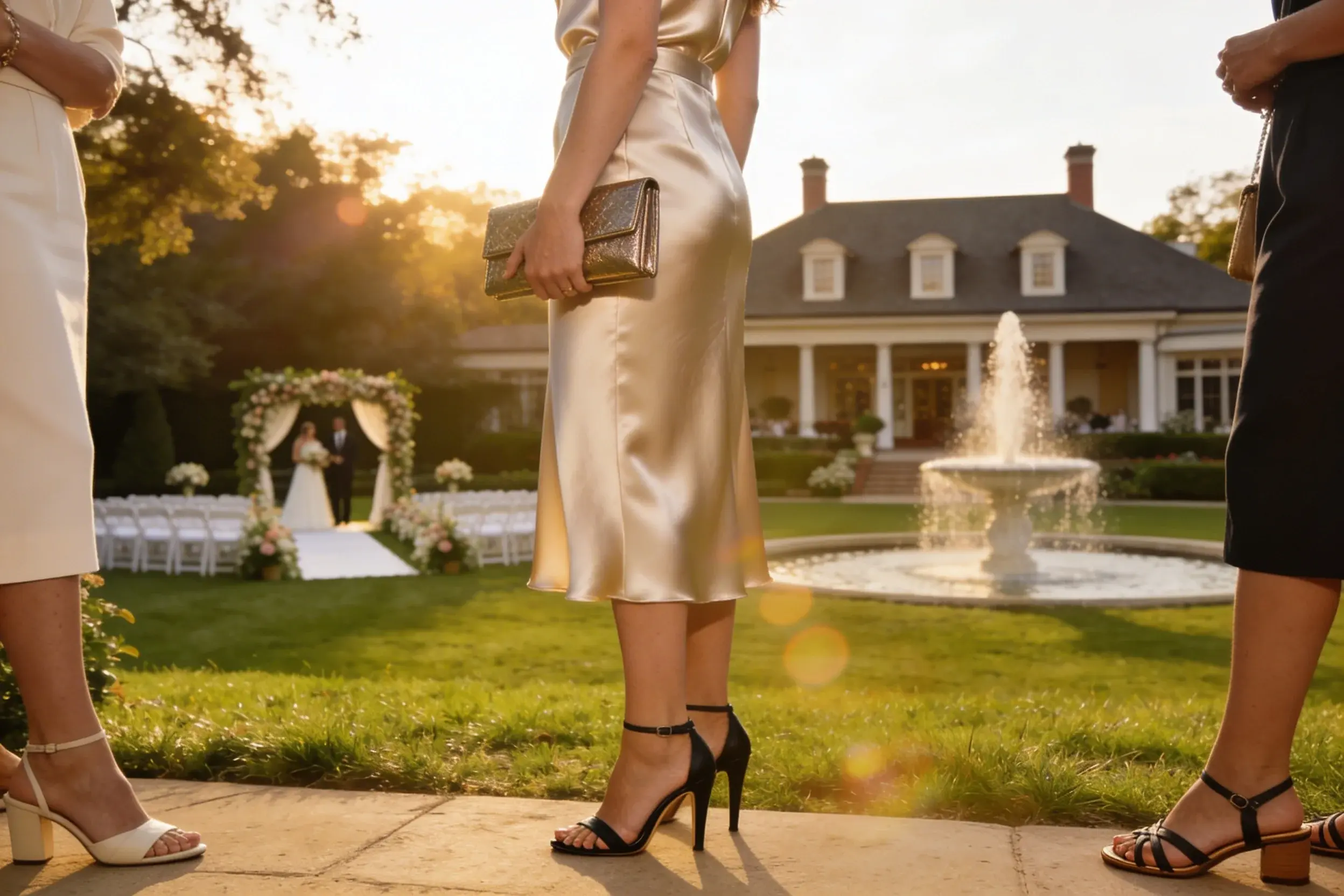
- Silk charmeuse: Shiny on the front, matte on the back, fluid drape. Think slinky blouses and slip skirts.
- Silk crepe de chine: Slight pebbled texture, subtle matte finish.Great for shirts you actually wear to death.
- Silk twill: More structure, holds shape. Ideal for scarves and tailored shells.
Care and Styling
- Steam instead of iron to keep the drape intact.
- Pair a silk shirt with tailored wool trousers. Add minimal jewelry.Done.
- IMO, a silk slip dress + oversized blazer = peak “I woke up chic.”
Wool (and Its Elevated Cousins): The Backbone of Tailoring
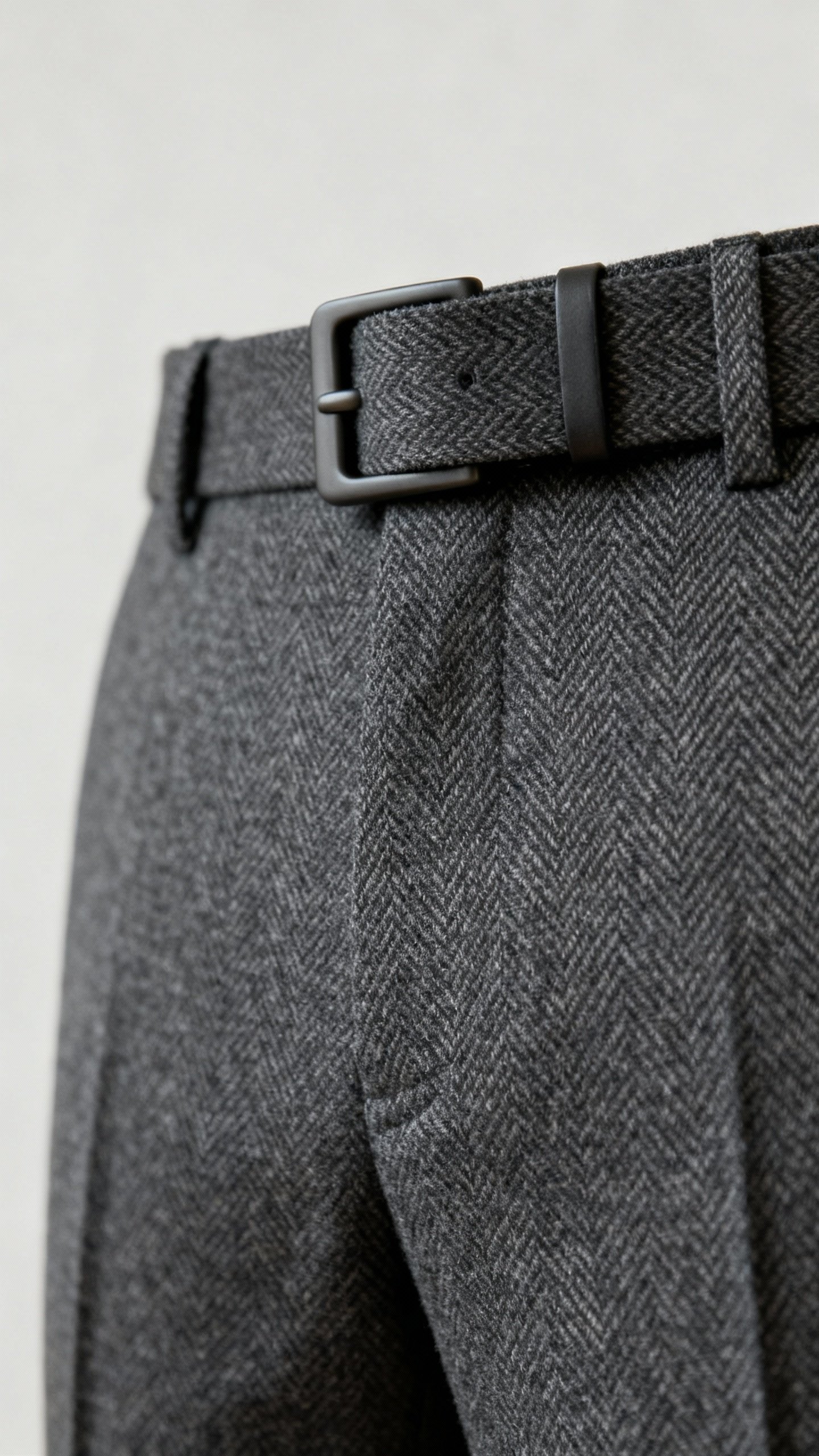
If cashmere sets the vibe, wool holds the structure. The right wool makes blazers, trousers, and coats look expensive even in simple cuts.
Best-in-Class Choices
- Merino: Smooth, breathable, and versatile. Great for fine knits and lightweight suits.
- Virgin wool: Crisp and resilient.Ideal for trousers and blazers that need shape.
- Worsted wool: Tightly spun, clean finish. The office hero.
- Cashmere-wool blends: Softens structure without losing it. Perfect for overcoats.
Tailoring Tips
- Check the drape: high-twist wools resist wrinkles and travel well.
- Feel the hand: it should feel smooth, not scratchy.Scratchy = lower quality or poor finishing.
- Go for subtle patterns: herringbone, pinstripes, and faint checks add depth without noise.
Linen: Relaxed, But Make It Luxe
Linen brings that rich-but-relaxed energy. Yes, it wrinkles. That’s the charm.
High-quality linen wrinkles softly, not sharply, and it breathes like a dream.
How to Choose Linen That Looks Expensive
- Weight matters: Medium-weight linen hangs better and creases less.
- Blend smart: Linen-silk or linen-wool blends add structure and reduce rumpling.
- Weave and finish: Look for a tight weave and enzyme-washed finishes for softness.
Outfit Ideas
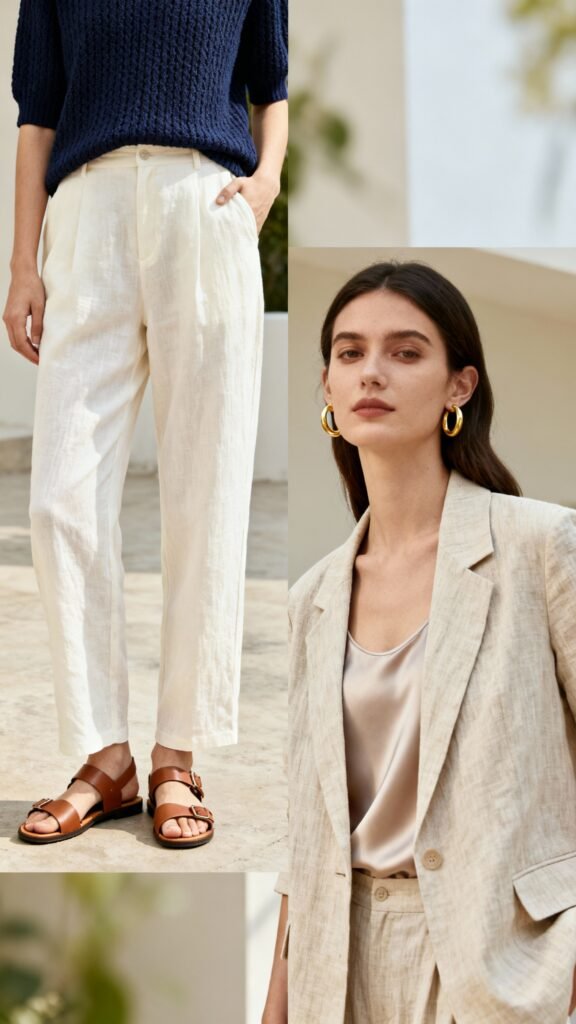
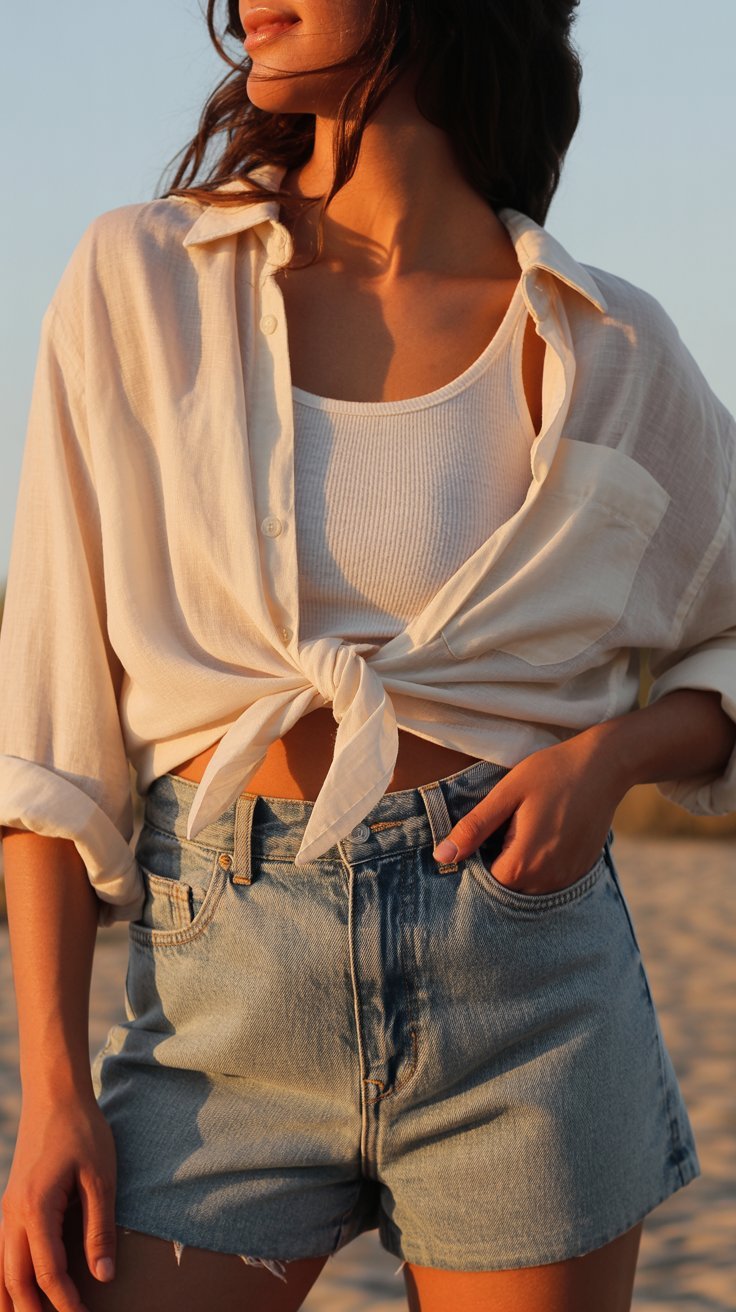
- Ivory linen trousers + navy knit top + leather sandals.
- Linen blazer with a silk tank and gold hoops. Effortless, not sloppy.
- FYI: black linen can look sharper than white for city wear.
Cotton (With Standards): The Everyday Quiet Hero
Cotton earns its spot when you choose the good stuff. We’re talking precise weaves and premium staples—no flimsy tees or see-through shirting.
The Cotton Hall of Fame
- Oxford cloth: Slightly textured, holds shape, lasts forever.The classic button-down king.
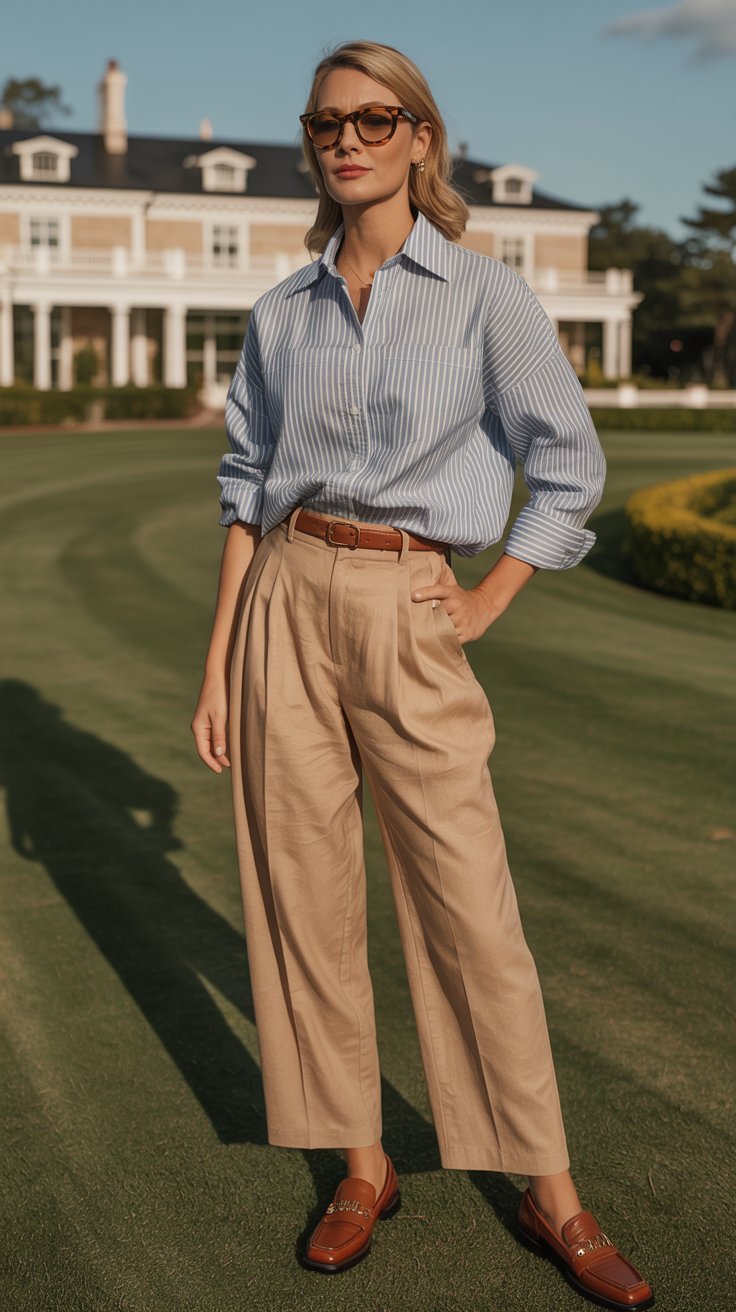
- Poplin: Smooth and crisp. Ideal for tailored shirts and minimal dresses.
- Supima/Egyptian: Long-staple fibers = stronger, softer, less pilling.
- Heavyweight jersey: For tees that don’t cling or twist.
How to Keep It Luxe
- Stick to weight: flimsy cotton = cheap vibe.
- Prefer garment-dyed or mercerized finishes for depth and durability.
- Keep colors muted: white, navy, stone, chocolate, olive, black.
Alpaca, Mohair, and Other Under-the-Radar Upgrades
Not everything needs to be cashmere. Alpaca and mohair bring texture and warmth with a little loft—perfect for statement knits that still feel quiet.
When to Choose Which
- Alpaca: Soft, light, and warm without bulk.Less pilling than cashmere. Great for oversized sweaters and coats.
- Baby alpaca: Finer and softer. Luxe without the logo tax.
- Mohair: Airy with a slight halo.Try mohair blends for durability and less itch.
Leather and Suede: The Texture That Means Business
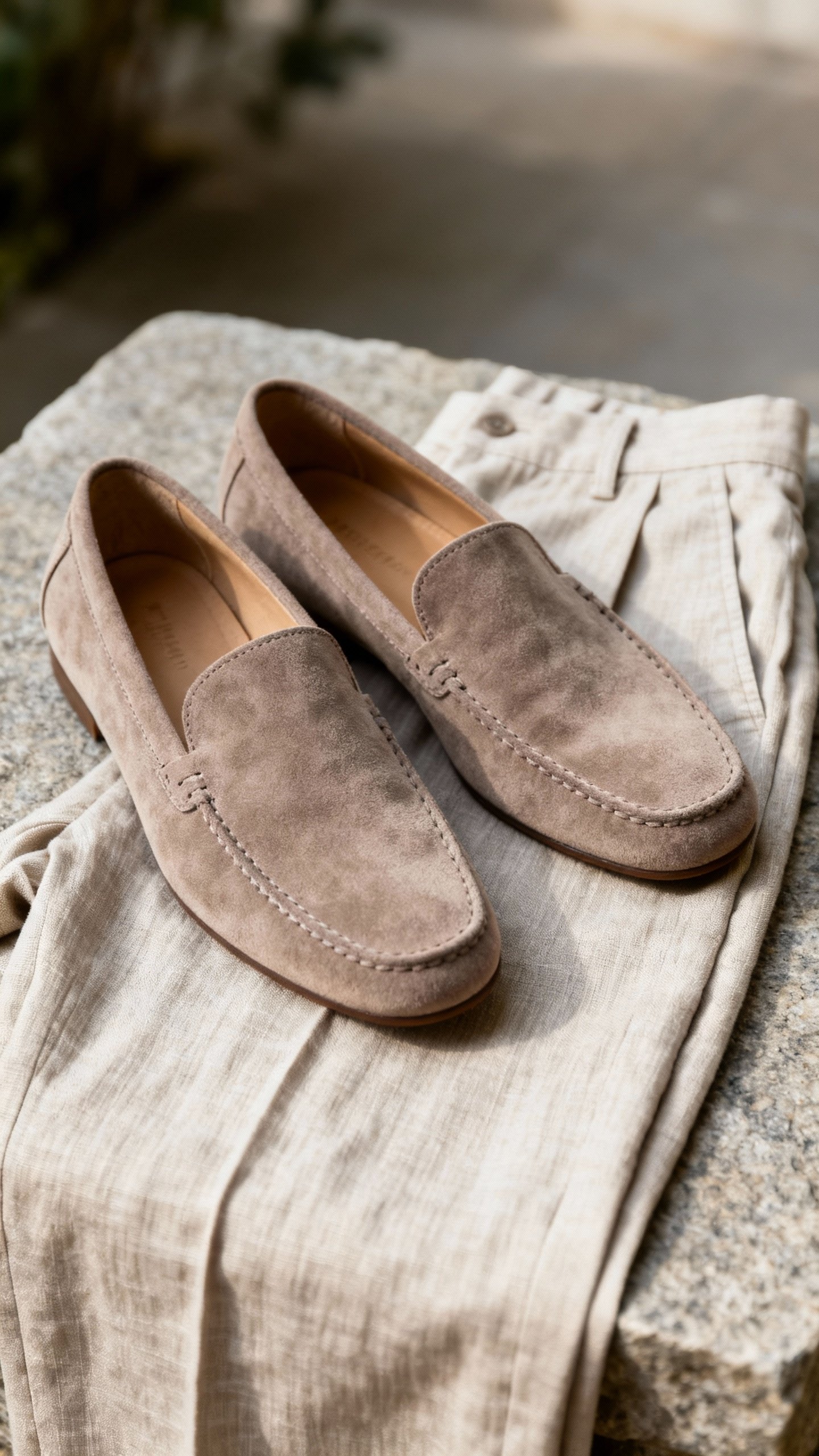
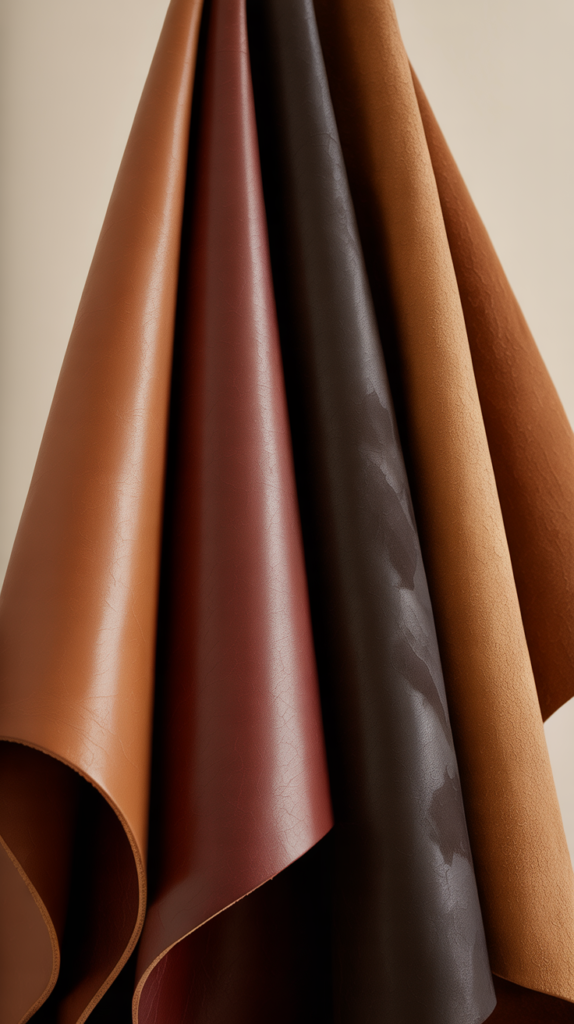
A flawless leather jacket or a suede loafer does more for your outfit than ten trend pieces. Quiet luxury leather isn’t loud; it’s buttery, structured, and perfectly matte.
Quality Markers
- Full-grain or top-grain leather: Ages beautifully, develops patina.
- Vegetable-tanned: Richer tone that deepens over time.
- Suede: Go for fine nap and consistent color. Brush it, protect it, baby it.
Where Leather Shines
- A slim belt with subtle hardware.
- Minimal sneakers in smooth calfskin.
- A structured tote that keeps its shape.IMO, this is the stealth wealth bag move.
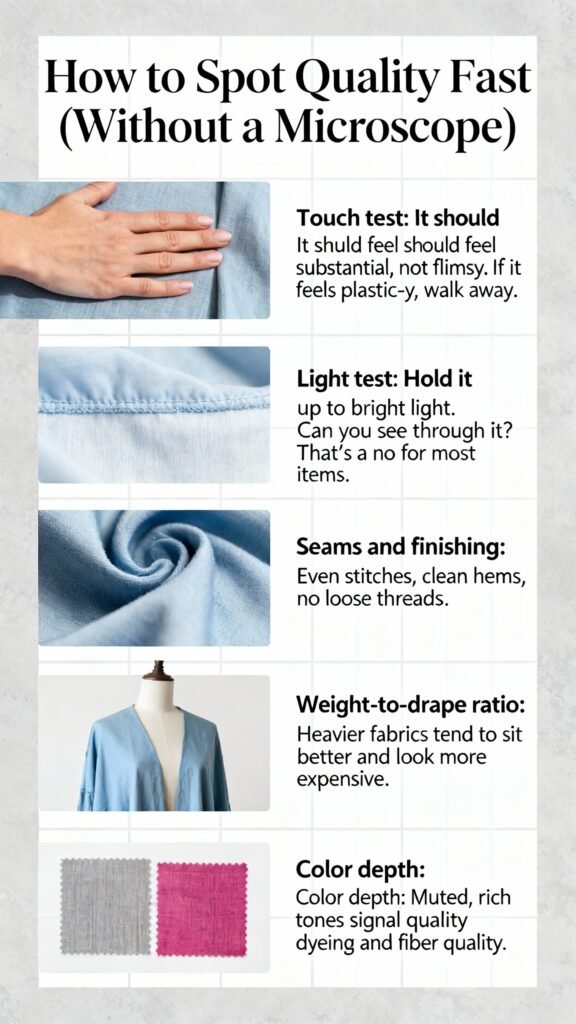
How to Spot Quality Fast (Without a Microscope)
You don’t need to be a textile scientist. You just need a few checkpoints.
- Touch test: It should feel substantial, not flimsy. If it feels plastic-y, walk away.
- Light test: Hold it up to bright light.Can you see through it? That’s a no for most items.
- Seams and finishing: Even stitches, clean hems, no loose threads.
- Weight-to-drape ratio: Heavier fabrics tend to sit better and look more expensive.
- Color depth: Muted, rich tones signal quality dyeing and fiber quality.
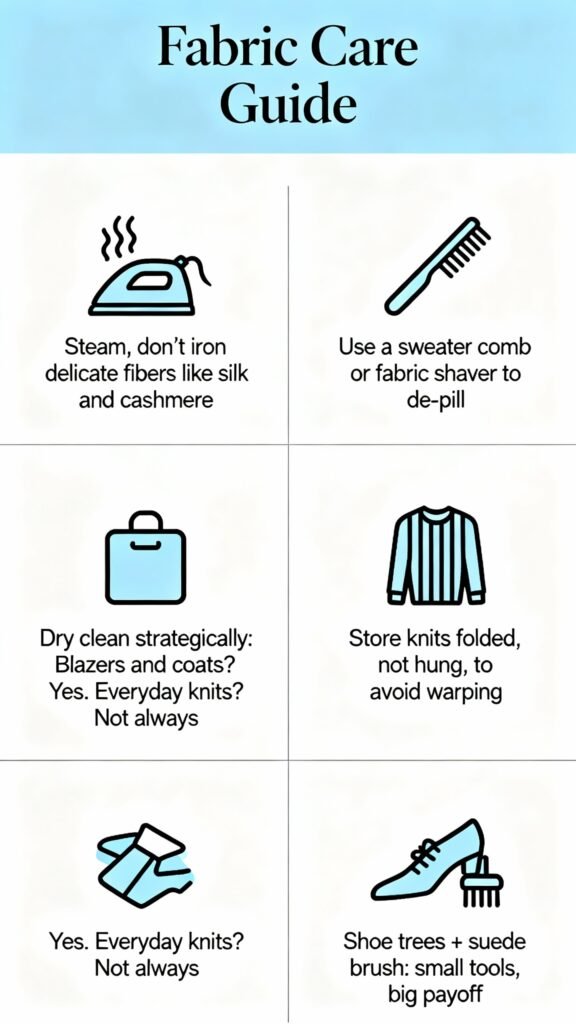
Care: Because Quiet Luxury Loves Maintenance
Maintenance keeps fabrics luxe. No one looks rich in a pilled sweater.
- Steam, don’t iron delicate fibers like silk and cashmere.
- Dry clean strategically: Blazers and coats?Yes. Everyday knits? Not always.
- Use a sweater comb or fabric shaver to de-pill.
- Store knits folded, not hung, to avoid warping.
- Shoe trees + suede brush: small tools, big payoff.
Build Your Quiet Luxury Fabric Capsule
Let’s translate the fabric talk into actual wardrobe pieces.
Start here and you’ll cover 90% of life.
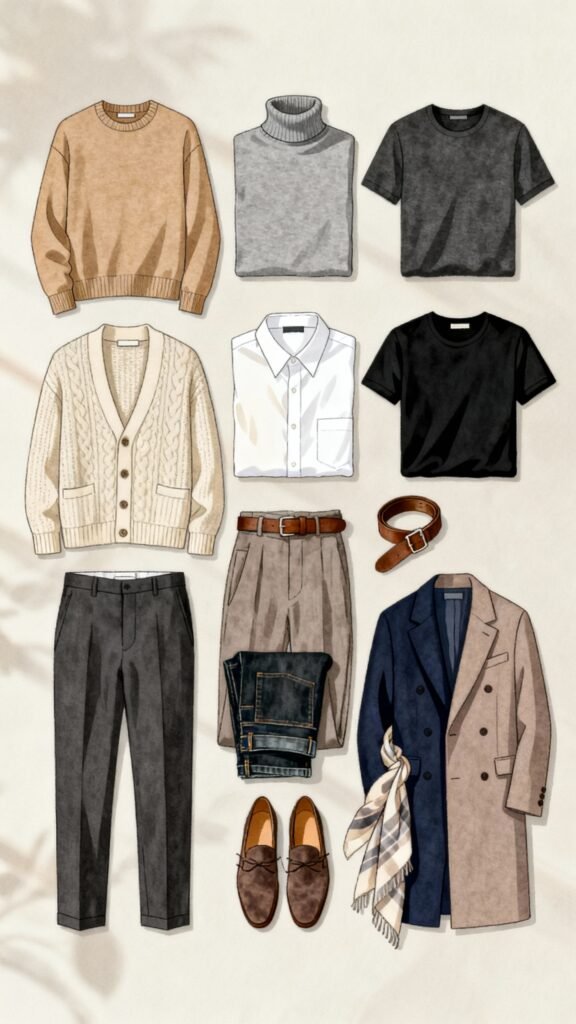
- Knits: Cashmere crewneck (camel or grey), merino turtleneck, alpaca cardigan.
- Tops: Silk crepe shirt (ivory), cotton poplin shirt (white), heavyweight tee (black).
- Bottoms: Worsted wool trouser (charcoal), linen trouser (stone), dark denim with minimal stretch.
- Layering: Wool-cashmere coat (navy or taupe), linen-blend blazer.
- Accessories: Leather belt, suede loafers, silk scarf.
FAQ
Is cashmere always better than merino?
Not always. Cashmere feels softer and reads luxe, but merino wins for durability and temperature control. If you run warm or want everyday knits that hold up, merino often beats cashmere.
IMO, own both.
Can I do quiet luxury on a budget?
Yes. Buy fewer pieces, but buy better. Hunt for sales, choose neutral colors, and prioritize fabric quality over trends.
A great cotton shirt beats a flashy polyester blouse every time.
How do I prevent pilling on knits?
Choose long-staple fibers, avoid constant friction (no tote bag strap rubbing the same spot daily), and rotate wear. De-pill gently with a sweater comb and wash inside out in a mesh bag when needed.
What about synthetics—are they banned?
Not banned, just invited as plus-ones. A touch of nylon or elastane can add strength and shape.
Aim for blends under 10–15% and make sure the fabric still feels breathable and matte.
What colors feel most “quiet luxury”?
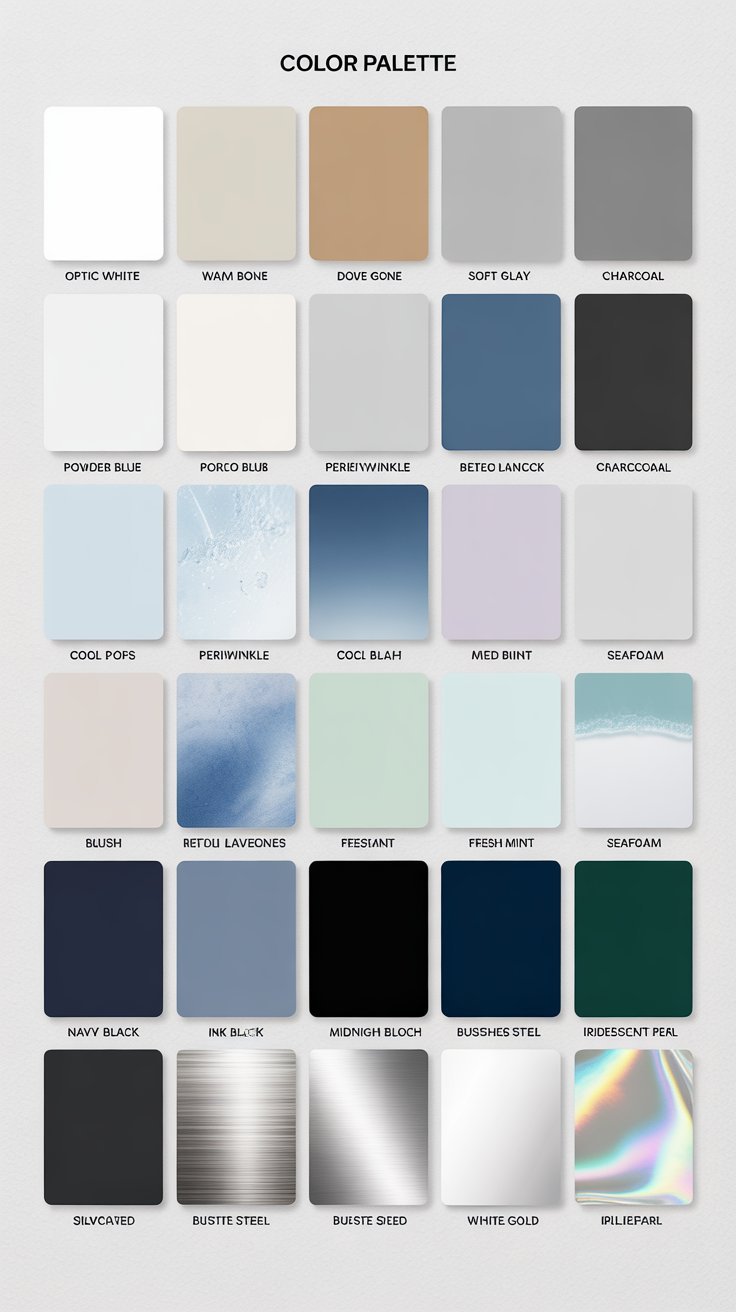
Think gallery palette: camel, ivory, navy, charcoal, black, olive, chocolate, stone. These shades mix easily, hide wear, and look refined. Add one accent color if you must—oxblood or deep forest plays nicely.
How do I care for silk without ruining it?
Spot clean when you can, use a gentle silk detergent for handwashing, and air dry on a padded hanger.
Steam to release wrinkles, and store away from sunlight to prevent fading.
Conclusion
Quiet luxury starts with fabric that feels good, drapes well, and lasts. Pick cashmere, silk, wool, linen, elevated cotton, and a touch of leather or alpaca, then keep everything clean and well-fitted. Build slowly, choose neutrals, and let texture do the flexing.
No logos needed—your clothes will speak softly and say everything.