


Affiliate links used. Thanks for supporting my curated fashion finds.
Humidity laughs at your makeup, melts your hairstyle, and bullies your sunscreen into a greasy mess. So if you’re tired of feeling like a glazed donut by noon, let’s fix your SPF game. We’re talking lightweight, non-greasy, actually-wearable sunscreen that survives sweat and stickiness.
Your pores can breathe, your T-zone can chill, and your skin still gets the protection it needs.
Humidity turns your skin into an oil production facility. Heavy creams just sit there and slide around. You need sunscreens that feel like nothing, dry fast, and resist sweat.
Bonus points if they help control shine. Look for these features:
Not all sunscreens behave the same when your face decides to dew up. Some formulas just do better.
These feel like skincare, not sunscreen. They spread easily, absorb quickly, and rarely pill under makeup.
You’ll forget you’re wearing anything, which IMO is the dream.
They blur a bit like primer and control shine without suffocating your skin. Great under makeup and for combo-to-oily types.
– Mineral (zinc oxide, titanium dioxide): Gentler for sensitive skin, but can feel heavier or look chalky.
Modern micronized versions can feel light, though.
– Chemical (like Tinosorb S/M, Uvinul A Plus): Often more lightweight and invisible, especially in watery gels. If you’re sensitive, patch test first.
Strong opinions incoming. These crush it in sticky weather and layer like a dream.
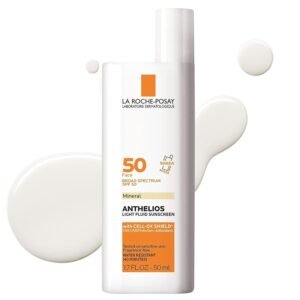
La Roche-Posay Anthelios UVMune 400 Invisible Fluid SPF50+ Ultra-thin, sinks in fast, plays well with makeup.
Minimal white cast on most skin tones. Not the most matte, but it never feels heavy. FYI: Fragrance-free version exists and is the better pick for sensitive skin.
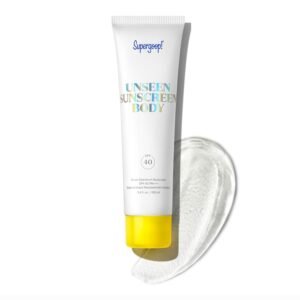
Supergoop!
Unseen Sunscreen SPF 40 Clear, velvety gel that doubles as a primer. If you get shiny 10 minutes after stepping outside, this helps. Not ideal if you dislike a silicone slip, but the filter and finish combo is fab for humidity.
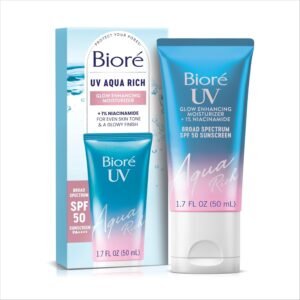
Biore UV Aqua Rich Watery Essence SPF 50+ Famous for a reason: it disappears instantly and doesn’t pill.
Makeup-friendly and comfy in hot climates. Contains alcohol for that fast dry-down—great for grease control, but skip if you’re very sensitive or dry.
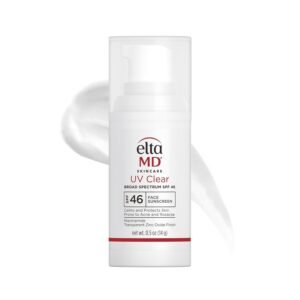
EltaMD UV Clear Broad-Spectrum SPF 46 Lightweight, non-greasy, and designed for acne-prone and sensitive skin (hi, niacinamide). It’s not glass-skin invisible on deeper tones, but it’s among the most wearable mineral-leaning options.
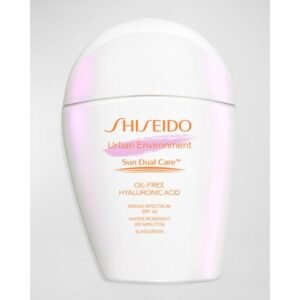
Shiseido Urban Environment Oil-Free Sunscreen SPF 42 Oil-free, semi-matte finish, and holds up when the air feels like soup.
Stays put without that tight, dry film.
Bondi Sands SPF 50+ Face Fluid Featherlight, broad-spectrum, and water-resistant. Plays nicely with sweat and sun, and works under light makeup. Affordable and easy to reapply.
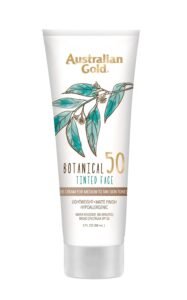
Australian Gold Botanical Tinted Face SPF 50 Mineral, matte, and surprisingly lightweight.
The tint helps cancel white cast and evens tone—especially clutch for humid days when foundation feels like a trap.
You can buy the best formula and still look like a slip-n-slide by lunch if you apply it wrong. Let’s stack the deck.
– Powder SPF: Great for shine control, not ideal as your only protection.
Think touch-ups, not primary.
– Mists: Convenient, but spray generously and rub in for even coverage.
– Tinted sunscreen sticks: Swipe, pat with fingers or sponge, done.
Humidity doesn’t just test texture—it tests the whole formula. These ingredients help.
– Heavy occlusives as a base (thick balms or heavy creams). – Rich, fragrant oils right before SPF. – Over-exfoliation that makes skin reactive and sweaty, then everything pills. Balance is key, IMO.
You can wear makeup in humidity without watching it melt.
But you need the right lineup.
– Avoid rubbing back and forth—pat or glide in one direction. – Don’t overload layers; simplify your morning routine. – Check for silicone clash: too many dimethicone-heavy layers can ball up.
Short answer: you need strong protection, not overkill. SPF 30 is the minimum; SPF 50 gives you more buffer if you sweat, miss spots, or don’t reapply on time. In steamy weather, SPF 50 buys you peace of mind.
Yes, if your sunscreen has enough humectants and feels comfortable, you can skip a separate moisturizer.
Keep one handy for dry patches or retinoid nights. Listen to your skin, not a rigid routine.
Not always, but many do. Tinted mineral formulas usually look better on medium to deep skin tones.
If cast drives you nuts, try modern chemical filters or hybrid formulas.
Every 2 hours outdoors, and sooner if you towel off. If you’re mostly indoors, reapply when you head back out or after lunch. Use sticks, mists, or cushion compacts to make it painless.
Any product can if the texture or ingredients don’t suit you.
Look for non-comedogenic, fragrance-free, and alcohol-balanced gels. Patch test new formulas along the jawline for a few days—your skin will tell you fast.
If you sweat or walk outside in sticky heat, water resistance helps. If you’re office-bound with AC, you can use a non-water-resistant fluid and be fine.
Match your SPF to your day, not just the season.
Humidity doesn’t have to equal greasy, slippery sunscreen regret. Pick a lightweight gel or fluid, apply enough, and reapply smartly. Try a few textures, keep what feels invisible, and ditch anything that pills.
Your skin stays protected, your makeup stays put, and you no longer feel like a melting candle—win-win, IMO.