Affiliate links used. Thanks for supporting my curated fashion finds.
Best High-end Skin Tools For Anti-aging (led, Microcurrent & More)
You want smoother skin, fewer lines, and glow that says “I sleep eight hours and drink my water”… even if that’s a lie. High-end skin tools can help you fake it convincingly. The trick?
Choosing devices that actually do something—and using them consistently enough to see results. Let’s cut through the noise and get to the good stuff: LED, microcurrent, and the luxe gadgets that earn their place on your vanity.
Why High-End Tools Are Worth It (Sometimes)
Not every $400 gadget deserves your paycheck. But some devices use the same tech dermatologists love—just at home-friendly strengths.
That consistency adds up. What makes a tool worth the splurge?
- Clinically studied technology: Think LED (red, near-infrared), microcurrent, radiofrequency, microneedling.
- Build + safety: Stable output, skin-contact sensors, FDA-clearance when applicable.
- Comfort + usability: If it’s annoying, you won’t use it. And consistency equals results.
LED Light Therapy: Low-Effort, High Payoff
LED masks look ridiculous. They also work.
Red and near-infrared wavelengths stimulate collagen, reduce fine lines, and calm inflammation. Blue targets acne bacteria. You sit there.
It does stuff. That’s the pitch. What to look for:
- Wavelengths: Red (630–660 nm) and near-infrared (800–880 nm) for anti-aging; blue (around 415 nm) for acne.
- Irradiance: Enough power to matter but safe for home use. Brand transparency helps.
- Coverage + fit: Full-face coverage beats spot wands for anti-aging.
Top-tier picks
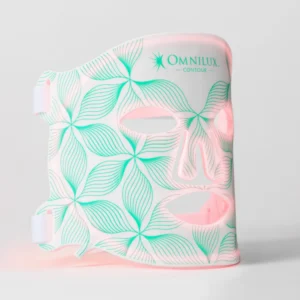
- Omnilux Contour Face: Red + near-infrared.
- Comfortable, flexible, and well-studied. Great for tone and fine lines.
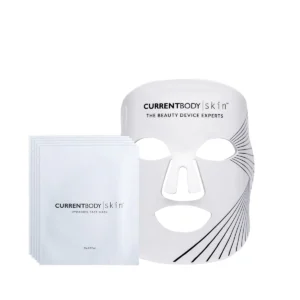
- CurrentBody Skin LED Mask:
- Similar wavelengths, excellent fit, tons of user data. Great value in the “high-end” bucket.
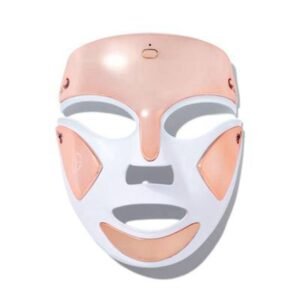
- Dr.Dennis Gross DRx SpectraLite FaceWare Pro:
Fast 3-minute sessions with red + blue. Good if you want anti-aging and occasional breakout control.
How to use
- 3–5 times per week
- Clean, dry skin; then your regular routine
- Expect visible improvements in 6–10 weeks; better after 12
IMO: LED is the least effort for the most realistic payoff. If you’re lazy-but-ambitious, start here.
Microcurrent: A Five-Minute Face Lift (That You Have to Maintain)
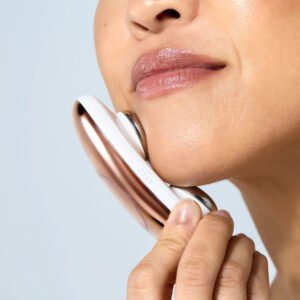
Microcurrent sends tiny electrical currents into your facial muscles.
It helps lift, firm, and define when used regularly. Think gym for your face—stop going, and muscles chill out again.
What to look for:
- Consistency: Stable waveform and intensity levels
- Ergonomics: A device that fits your face contours
- Conductive gel: Non-negotiable—no gel, no current
Top-tier picks
- Powerful, app-guided, and versatile programs (lift, texture, clarity). Pricey but delivers.
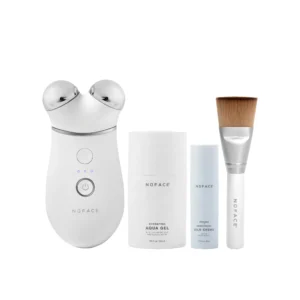
- NuFACE Trinity+ or Mini+:
- Easy to use, great for jawline and cheek lift.
- Attachments add targeted options.
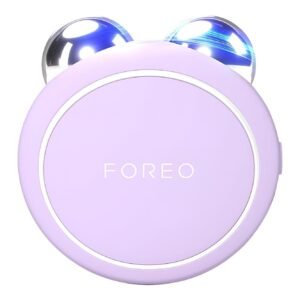
- Foreo Bear 2:
- Sleek, quick sessions with “anti-shock” sensors for comfort.
How to use
- 5–10 minutes, 4–5 times per week for 60 days, then 2–3 times per week
- Generous conductive gel layer; move slowly along muscles
- Immediate lift, cumulative toning with consistency
FYI: Avoid microcurrent if you’re pregnant, have a pacemaker, or have metal implants in the treatment area. Safety trumps snatched cheekbones.
Radiofrequency: Collagen Remodeling at Home
Radiofrequency (RF) heats the deeper skin layers to stimulate collagen and tighten skin over time. At-home RF runs gentler than in-office, but with regular use, you can see firmer texture and a bit of tightening. What to look for:
- Temperature control: Consistent, safe heat (usually around 40–43°C at the skin surface)
- Contact gels: RF needs slip and conductivity
- Treatment time: You’ll need patience—10–20 minutes per session
Top-tier picks
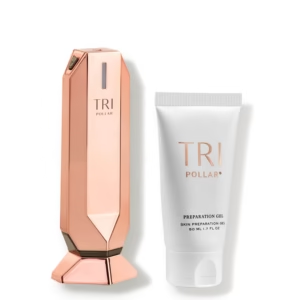
- TriPollar Stop X or Stop Vx:
- Reliable at-home RF, good for jawline and cheek firmness.
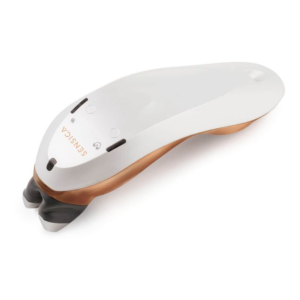
- Sensica Sensilift: RF with motion sensors for safety; gentle but effective with long-term use.
- NuFACE TRINITY+ with RF add-ons: If available in your region, some ecosystems bundle RF; check local models.
How to use
- 2–3 times per week for 8–12 weeks, then weekly maintenance
- Work in small zones; keep the device moving
- Expect gradual tightening, best seen after 8+ weeks
IMO: RF takes commitment, but if laxity bugs you more than fine lines, it’s worth your time.
Microneedling: Texture, Pores, and “Why Does My Skin Look So Smooth?”
Microneedling creates micro-injuries that trigger collagen.
You get smoother texture, smaller-looking pores, and softer fine lines. Home rollers exist, but motorized pens with sterile, single-use cartridges make a safer bet. What to look for:
- Cartridge quality: 12–36 needles, single-use, sealed
- Adjustable depth: 0.25–0.5 mm for at-home anti-aging
- Speed settings: Faster equals smoother, less drag
Top-tier picks
- Dr. Pen A7 or M8 (from reputable sellers): Reliable, adjustable depth.Use authentic cartridges only.
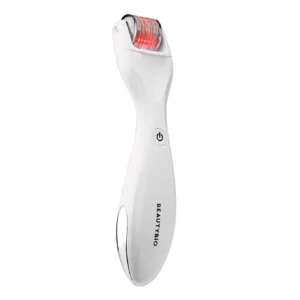
- BeautyBio GloPRO:
-
- Gentle, user-friendly, with LED. Great “intro” device.
- AnteAGE or Exeo kits: Pair devices with growth-factor serums for post-needling support.
How to use
- Sanitize everything. No exceptions.
- Depth 0.25–0.5 mm for home; every 2–4 weeks
- Post-care: hyaluronic acid, barrier cream, SPF.No actives (retinoids/acids) for 3–5 days.
Important: If you’re acne-prone or you have active breakouts, skip needling those areas. Don’t spread bacteria around like confetti.
Complementary Heroes: Devices That Boost Results
You don’t need everything. But pairing smartly gives you better outcomes.
- LED + Microcurrent: Calm inflammation and boost collagen, then lift.Great for daily or alternating nights.
- RF + LED: Firmness from RF, healing and collagen signaling from LED. Use on different days.
- Microneedling + LED (red/NIR only): LED a day or two after needling to support recovery. Avoid blue right after needling.
Best-in-class accessories
- Conductive gels: Look for glycerin-based gels (NuFACE, ZIIP Crystal) or simple aloe gel.
- Barrier creams: La Roche-Posay Cicaplast, Avene Cicalfate post-procedure.
- SPF: Daily, no excuses—especially after any device.
How to Build a Realistic Device Routine
You want gains without turning your bathroom into a clinic?
Do this:
- Pick 1–2 core goals: Lift? Firmness? Texture?
- Choose 2 devices max: Example: LED (baseline) + microcurrent (lift).Add RF later if you’re thriving.
- Schedule it:
- Mon/Wed/Fri: LED (10 min)
- Tue/Thu: Microcurrent (10 min)
- Sun: RF or rest
- Cycle microneedling: Once monthly; go gentle the week after.
- Track progress: Monthly selfies, same lighting. You’ll see it before your friends admit it.
Common Mistakes to Avoid
- Doing too much too fast: More devices ≠ faster results. Your skin likes routine, not chaos.
- Skipping conductive products: Current and RF need slip.Dry skin equals waste of time.
- Inconsistent use: These tools are gym memberships. You have to show up.
- Ignoring contraindications: Pregnancy, pacemakers, epilepsy, active infections—check your device manual and ask your provider if unsure.
- Zero SPF after treatments: Post-device skin needs protection. Don’t undo your hard work outdoors.
FAQ
Can I use LED and microcurrent on the same day?
Yes.
Do LED first on clean, dry skin, then apply conductive gel and use microcurrent. If your skin feels sensitive, alternate days. Listen to your face, not your calendar.
How long until I see results?
With LED, expect 6–10 weeks for visible changes. Microcurrent gives immediate lift with cumulative results in 4–8 weeks. RF and microneedling show firmer texture after 8–12 weeks.
Consistency wins, not intensity.
Are expensive devices always better?
No. But high-end devices often offer better build, consistent output, and safety features. If a brand shares wavelengths, energy output, and studies, that’s a green flag.
If they won’t tell you specs? Hard pass.
What skin types benefit most?
Most skin types can use LED and microcurrent. Sensitive skin should start slow.
RF and microneedling help with laxity and texture, respectively, but require more care. If you have rosacea, focus on red/NIR LED and skip aggressive heat and needling unless your derm approves.
Can I combine these tools with retinoids and acids?
Yes—with timing. Avoid acids/retinoids right before microcurrent or RF sessions to minimize irritation.
Skip strong actives for 3–5 days after microneedling. LED plays well with almost everything.
Are at-home results as good as in-office?
No—and that’s okay. Home devices use lower energies but make up for it with frequency.
Think “slow and steady.” For big lifts or deep resurfacing, see a pro. For maintenance and visible improvements, home tools shine.
The Bottom Line
If you want anti-aging results without living at your derm’s office, invest in LED for baseline collagen support, add microcurrent for lift, and consider RF or microneedling for firmness and texture. Choose devices you’ll actually use, protect your skin barrier, and commit to a routine.
Do that and, FYI, your future self will thank you every time the front camera flips on unexpectedly.