

Unlock Focus “Laess, but Better”: Applying Dieter Rams’ Principles to Your Life
We chase more apps, more goals, more everything—and feel less satisfied. Dieter Rams had a spicy counterpoint: less, but better. His design philosophy built timeless products by cutting the fluff and doubling down on what matters. What if we did that with our lives?
Why “less, but better” isn’t minimalism cosplay
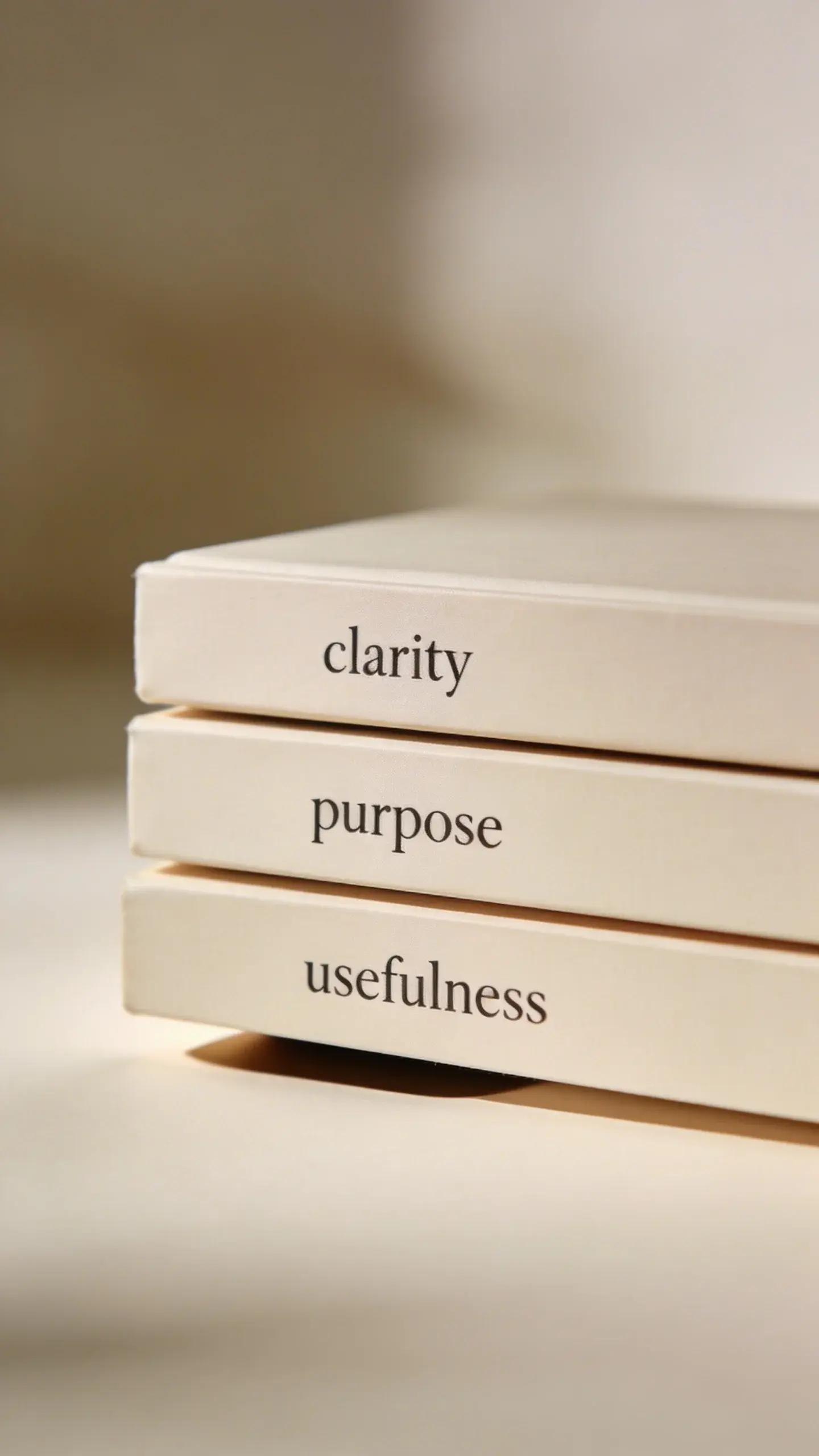
Minimalism often turns into a numbers game—“I own 37 things and a succulent.” Rams didn’t care about looking minimal; he cared about clarity, purpose, and usefulness. That vibe translates perfectly to how we work, buy, plan, and even rest.
You don’t need a white-walled apartment or a single fork. You need fewer distractions, higher standards, clearer focus. IMO, that’s way more interesting—and a lot more livable.
Principle 1: Good design is innovative — make room for better ideas
You can’t think clearly with 47 tabs open and three side hustles fighting for oxygen. “Less, but better” starts with protecting space for innovation.
- Schedule “blank time” on your calendar. Protect it like it’s a meeting with Beyoncé.
- Kill zombie projects. If it’s not moving, it’s draining you.
- Keep an ideas list, not an ideas dungeon. Revisit weekly and choose one to test.
Quick test: what’s the one thing worth 10x effort?
If you focused on one project for the next 90 days, which would change everything? That’s your bet. Cut the rest to support it.
Principle 2: Good design is useful — optimize for outcomes, not optics
Pretty systems that don’t move the needle = decorative productivity. Rams obsessed over function. You should too.
- Write outcome-based goals: “Publish 6 newsletter issues” beats “Work on newsletter.”
- Create friction for nonsense: Uninstall autoplay apps. Hide browser bookmarks. Set Do Not Disturb by default.
- Make tools serve you: One note app, one task app, one calendar. No app safari every month, please.
Design your daily “core loop”
Define 3-5 high-value actions you repeat daily. Example:
- Plan the day (10 minutes)
- Focus session (2 blocks, 50 minutes each)
- Move body (30 minutes)
- Ship something tiny (one email, one update, one paragraph)
Keep it simple. Keep it repeatable. That’s how useful habits compound.
Principle 3: Good design is understandable — reduce cognitive tax
Confusing systems die fast. If your to-do list needs a user manual, yeah, that’s a red flag.
- Use plain names: “Bills,” “Work,” “Family,” “Health.” No “Quantum Leap Folder.”
- One inbox per type: Email for comms, notes for ideas, tasks for actions. Stop parking todos in Slack.
- Visual defaults: Color-code 3-4 categories max. If your calendar looks like Skittles, simplify.
The 30-second rule
You should find any file, note, or login within 30 seconds. If not, fix the system, not your memory.
Principle 4: Good design is honest — cut the performative stuff
Rams hated gimmicks. You don’t need performative busyness either. Honest design—and honest living—means telling the truth about constraints.
- Admit capacity: Track how many deep hours you actually have. FYI, most people get 3-4 per day.
- Say no with data: “I’m at capacity until March” > “I’ll try.”
- End zombie commitments: If it drains you and nobody cares, sunset it gracefully.
Script your default “no”
Try: “This is interesting, but I’m focused on X for the next 60 days. If you still need help after, ping me.” Clear, kind, honest.
Principle 5: Good design is long-lasting — build for the decade
Trends fade; foundations last. Rams designed products that aged well because he prioritized timeless value over novelty.
- Buy the boring thing that works: Durable shoes, a decent chair, a reliable laptop. Fewer, better upgrades.
- Master evergreen skills: Writing, communication, problem framing, basic finance. Compounding > hype.
- Create assets, not noise: Articles, playbooks, portfolios, relationships. Things that work while you sleep.
The “ten-year test”
Will this still matter in a decade? If yes, go deep. If no, cap your time and move on.
Principle 6: Good design is as little design as possible — edit, then edit again
Here’s the core of “less, but better”: subtraction as strategy. Editing beats adding—every time.
- Weekly prune: Delete one app, unsubscribe from five emails, archive old docs.
- Project diet: One major goal, one minor, everything else parked in a backlog you review monthly.
- Decision presets: Default breakfast, workout, and work block. Save your brain for the big choices.
The ruthless clarity checklist
Before you say yes:
- Does this align with my top two priorities?
- Will it create more future options, not fewer?
- Can I do it well without torching my energy?
If you can’t clear those, it’s a no. Not a “maybe later,” a no.
Principle 7: Good design is environmentally friendly — your attention is a resource too
Yes, sustainability matters in the literal sense. But also protect your mental environment. Clutter and noise burn fuel.
- Set default quiet: Notifications off by default. Badge counts? Gone.
- Clean edges: Clear your desk at day’s end. Park tomorrow’s first task on a sticky note.
- Tech hygiene: Move social apps off your home screen. Use a dumbwatch mode during focus blocks.
Attention budget mini-plan
Give your highest energy to the highest leverage task. Save admin and chat for your low-energy window. Protect sleep like it’s revenue—because it is.
Applying it across life domains
Let’s make it practical.
- Work: Trim meetings to 25 or 50 minutes. Send memos instead of holding status calls. One roadmap, not six.
- Home: Keep one cleaning caddy. Store like with like. If it doesn’t have a home, it doesn’t stay.
- Money: Automate bills and savings. 3-5 core funds, not 23. Review quarterly, not obsessively.
- Fitness: Pick a simple program and run it for 12 weeks. Add weight or reps, not complexity.
- Social: Fewer, deeper friendships. Schedule standing calls or dinners. Show up consistently.
One-week reset plan
– Day 1: Audit apps and notifications. Delete, mute, unfollow liberally.
– Day 2: Define your top two priorities for the next 90 days.
– Day 3: Build your daily core loop and block it on your calendar.
– Day 4: Clean your desk, bag, and desktop. Create a simple folder system.
– Day 5: Build decision presets (meals, workouts, work start/stop).
– Day 6: Write your “no” scripts. Practice them twice.
– Day 7: Reflect: what felt lighter? Double down there.
FAQ
Does “less, but better” mean I should own almost nothing?
Nope. It means you own and do fewer things that actually matter. If your hobby needs gear, own the gear. Just avoid duplicates and dusty “aspirational” purchases.
How do I know what to cut without regret?
Use the ten-year test and the ruthless clarity checklist. If it doesn’t align with your top priorities or create future options, it goes. You can always revisit the backlog later—nothing disappears, you just stop tripping over it.
What if my job demands constant context switching?
You still control your edges. Batch similar tasks, set office hours for chat, and protect at least one focus block daily. FYI, even 50 minutes of protected time can change your entire output.
Isn’t this just another productivity trend?
Trends add hacks; Rams subtracts noise. “Less, but better” sticks because it’s principle-based. You can apply it to work, home, and even how you choose friends. IMO, that’s more durable than color-coding a to-do list.
How do I get buy-in from my team or family?
Start by modeling it. Share a one-page “here’s what I’m cutting and why.” Invite others to choose one thing to remove. Celebrate what you stop doing, not just what you add. Momentum beats mandates.
What if I like variety and spontaneity?
Cool. Structure the basics so you can be spontaneous elsewhere. When your essentials run on rails, you get more room to play, not less.
Conclusion
“Less, but better” isn’t about owning one spoon and judging your friends’ closets. It’s about editing your life so the meaningful parts get maximum surface area. Subtract the noise, raise your standards, and give your best ideas some breathing room. You might do fewer things—great. You’ll also do them better, and that’s the point.

Related Posts
- The Polished Life Planner: Because Elegant Women Don’t Do Chaos
The Polished Life Planner: Because Elegant Women Don’t Do Chaos Let’s be real—most planners look…
- Elegant Woman Daily Planner: Free Printable to Organize Life with Grace
Elegant Woman Daily Planner: Freebie to Organize Your Life Like a Lady Let me guess—you…
- How To Dress Classy In Casual Everyday Life
How To Dress Classy In Casual Everyday Life You want to look classy without looking…